

What is Melamine Foam?
Melamine foam, also known as melamine sponge, is a new type of porous functional material made from melamine resin through a high-temperature, high-pressure foaming process. It features a three-dimensional open-cell structure with a porosity exceeding 99%, combining three core properties: sound absorption and noise reduction, thermal insulation, and inherent flame retardancy. It is widely used in building acoustics, industrial pipeline insulation, rail transit, automotive manufacturing, and electronic appliances, making it one of the most well-balanced high-performance foam materials available today.
In recent years, driven by China's Dual Carbon strategy and the growing emphasis on energy efficiency, safety, and environmental protection across industries, melamine foam has been transitioning from a niche high-end material into broader industrial application markets.

One of the most outstanding properties of melamine foam is its exceptional acoustic absorption capability. Thanks to its highly interconnected three-dimensional open-cell structure, when sound waves enter the material, they undergo reflection, refraction, and friction within countless tiny pores, converting acoustic energy into heat and dissipating it — thereby achieving highly effective sound absorption and noise reduction.
According to third-party test data, the Noise Reduction Coefficient (NRC) of melamine foam can reach 0.85 or above, meaning the majority of incident sound waves are effectively absorbed rather than reflected. In the mid-to-high frequency range, melamine foam performs particularly well, making it an ideal acoustic treatment material for concert halls, lecture theaters, recording studios, and industrial workshops.
Compared with traditional sound-absorbing materials, melamine foam offers the advantage of achieving the same acoustic performance with thinner profiles and lighter weight, saving installation space and reducing structural load.
Melamine foam has an extremely low thermal conductivity, typically below 0.035 W/(m·K), placing it in the category of high-performance insulation materials. This means it can effectively block heat conduction and minimize thermal energy loss.
Its insulation mechanism works on two fronts: on one hand, the ultra-low density and large volume of trapped static air within the cell structure reduce heat conduction through the solid skeleton; on the other hand, the open-cell structure restricts convective heat transfer through air. Together, these factors give melamine foam outstanding thermal insulation capabilities.
Even in high-temperature environments, melamine foam maintains stable insulation performance, with a long-term service temperature of up to 240°C and the ability to withstand even higher short-term thermal shocks. This gives it a unique advantage in scenarios such as industrial pipeline insulation, thermal equipment insulation, and noise reduction in high-temperature production workshops — where traditional organic insulation materials tend to shrink, melt, or release harmful gases under heat, while melamine foam continues to perform reliably.
Flame retardancy is a key feature that distinguishes melamine foam from the vast majority of organic foam materials.
Common materials such as polyurethane foam and polystyrene foam are highly flammable, burn rapidly, and release large amounts of toxic smoke, posing significant fire hazards in buildings. Even modified versions with added flame retardants carry the risk of additive migration and long-term performance degradation.
Melamine foam is different — it is an inherently flame-retardant material that requires no added flame retardants and possesses excellent fire-resistant properties on its own. Its flame retardancy rating can reach UL94 V-0 and meets the GB 8624 B1 standard.
When exposed to fire, melamine foam exhibits the following characteristics:
• Rapid self-extinguishing: quickly carbonizes and self-extinguishes once removed from the flame source, without sustained burning.
• No dripping: does not produce molten drips during combustion, preventing secondary damage.
• Low smoke and low toxicity: produces minimal smoke with low smoke toxicity, buying precious time for evacuation.
This characteristic has earned melamine foam widespread recognition in fields with extremely high fire safety requirements, including construction, rail transit, aerospace, and electronic appliances.

Melamine foam has an exceptionally wide operating temperature range, maintaining long-term stable performance from -160°C to +240°C, and can withstand even higher short-term thermal shocks.
In low-temperature environments, ordinary rubber and plastic materials become hard and brittle, losing elasticity and sealing performance. Melamine foam, however, retains excellent flexibility and structural integrity even at -160°C, with no risk of brittle fracture.
It performs equally well at high temperatures. Long-term use below 240°C shows no significant thermal deformation, thermal degradation, or performance decline, allowing it to continuously deliver sound absorption and insulation. For high-temperature equipment and pipeline insulation and noise reduction, melamine foam is a safe and reliable choice.

With a density of only 8–12 kg/m³, melamine foam adds virtually no structural load in applications such as building ceilings, vehicle interiors, and pipeline wrapping, making it easy to install and handle.
Melamine foam meets environmental requirements throughout production and use:
• Low formaldehyde emission: the resin is fully cured, with extremely low formaldehyde release that meets environmental standards.
• Dust-free and non-fibrous: unlike glass wool or rock wool, it produces no fiber dust, is non-irritating to skin and respiratory systems, and can be handled bare-handed without special protective equipment.
• Low VOC: low volatile organic compound content, with no odor during long-term use in enclosed spaces.
• Environmental certifications: RoHS and REACH certified, compliant with EU environmental standards.
• Recyclable: production offcuts can be recycled and reused, aligned with green manufacturing principles.
This is especially important for indoor applications — in densely populated spaces such as stadiums, office buildings, schools, and hospitals, choosing melamine foam means a healthier indoor environment.
Performance Dimension | Key Parameter | Description |
Sound Absorption | NRC ≥ 0.85 | Broadband efficient absorption, 99.9% open-cell rate |
Thermal Insulation | Thermal conductivity ≤ 0.035 W/(m·K) Aerogel version ≤ 0.015 W/(m·K) | Superior to traditional rock wool / glass wool |
Flame Retardancy | UL94 V-0 / B1 grade | Inherently flame retardant, self-extinguishing, no melting drips, low smoke |
Lightweight | Density 8–12 kg/m³ | 5–10x lighter than traditional materials, reduces structural load |
Temperature Range | -160°C to +240°C | Stable performance in extreme temperature environments |
Environmental Safety | RoHS / REACH certified, low formaldehyde | Dust-free, non-irritating, safe and eco-friendly |
Note: The above parameters are typical values. Specific specifications are subject to actual product technical data sheets.
In large public buildings such as stadiums, conference centers, concert halls, theaters, schools, and hospitals, melamine foam is widely used for wall-mounted acoustic panels, ceiling acoustic baffles, and spatial sound absorbers, effectively controlling reverberation time, improving indoor sound quality, and enhancing spatial comfort.
Compared with traditional glass wool and rock wool, melamine foam produces no fiber dust and does not irritate the respiratory system, making it more suitable for densely populated indoor spaces. It can also be faced with decorative fabrics in various colors and textures to achieve a unified balance of acoustic performance and aesthetic appeal.

Many high-temperature pipelines and power equipment simultaneously require both thermal insulation and noise reduction. Traditional solutions often require separate insulation and acoustic layers, resulting in complex structures, difficult installation, and high costs.
Melamine foam combines insulation and sound absorption in a single material — one layer solves both problems simultaneously. It can be fabricated into pipe shells, curved panels, flat sheets, and other shapes, directly wrapped around pipelines or equipment surfaces, with simple installation and significant results. It is particularly well suited for integrated insulation and noise reduction of thermal pipelines, boiler equipment, generator sets, fans, pumps, and similar equipment.
High-speed rail, metro, light rail, and new energy vehicles all have extremely high requirements for lightweight design, noise reduction, and fire safety. Melamine foam meets all three demands simultaneously:
• Lightweight: significantly reduces vehicle weight and improves energy efficiency.
• Sound absorption: effectively reduces interior noise and enhances passenger comfort.
• Flame retardancy: meets the strictest fire safety standards in rail transit and automotive industries (e.g., DIN 5510, EN 45545, etc.).
In high-speed rail cabin interiors, metro car side walls, automotive engine bay sound insulation, and roof thermal insulation, melamine foam is increasingly replacing traditional PU foam and glass wool as the acoustic and thermal insulation material of choice for premium transportation applications.
In electronic and electrical products, positions such as cooling air ducts, chassis interiors, and power modules often face simultaneous demands for managing airflow noise and thermal dissipation. Melamine foam can be processed into various shapes of acoustic liners, attached to chassis inner walls, effectively absorbing fan and airflow noise without obstructing air circulation. Its high-temperature resistance and flame-retardant properties ensure operational safety.
Melamine foam can also be used for air duct noise reduction in air conditioning systems and equipment compartment sound absorption, reducing ambient noise without compromising cooling efficiency.
Central air conditioning systems, ventilation ducts, fan coil units, and other HVAC equipment are among the primary noise sources in buildings. Melamine foam can be manufactured into duct liners, fan silencers, and plenum box acoustic layers, effectively controlling airflow noise.
Thanks to its open-cell structure with low airflow resistance, it does not significantly increase wind resistance, maintaining system ventilation efficiency while delivering excellent sound absorption — making it an ideal noise reduction material for HVAC applications.
The advantages of melamine foam extend beyond the material itself to its exceptional secondary processing versatility. Through various deep-processing techniques, it can be manufactured into products of diverse forms to meet the varied needs of different industries:
• Slab cutting / vertical cutting: large foam blocks cut into panels of various thicknesses for general engineering needs.
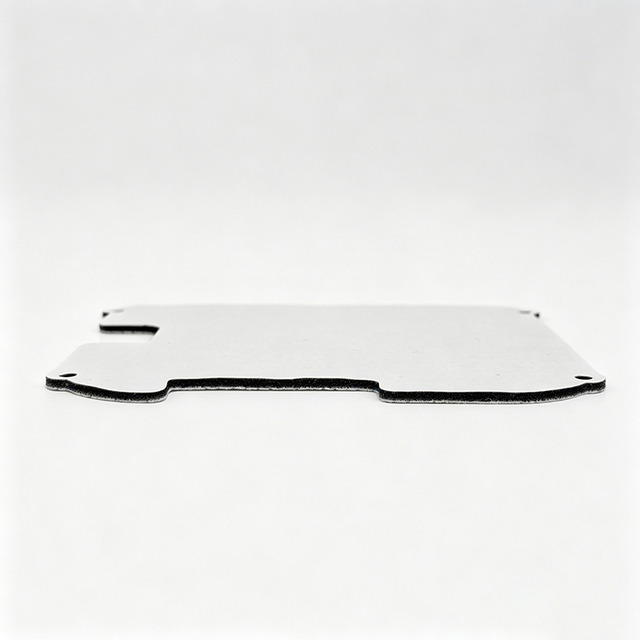
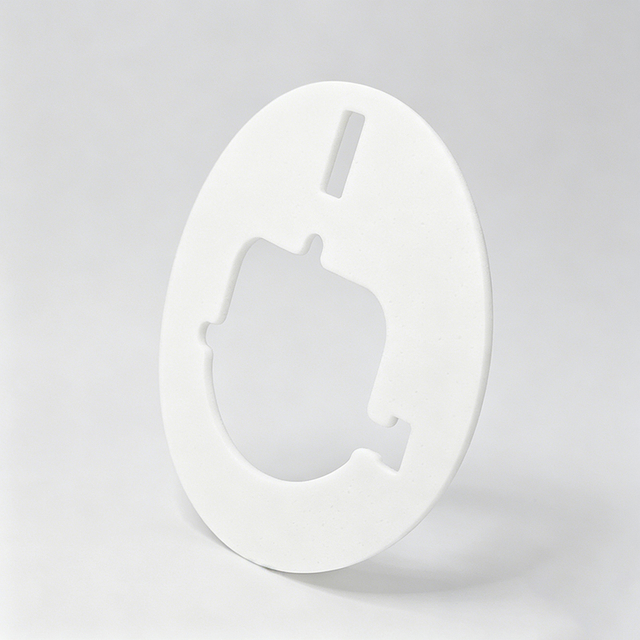
• Die cutting / stamping: processed to specified shapes per drawings, compatible with automated production line assembly.
• CNC complex-shape cutting: three-dimensional precision carving for complex shapes such as arcs, cones, and waveforms, precisely matching equipment and pipeline contours.
• Adhesive backing: laminated with pressure-sensitive adhesives (paper tape, fabric tape, foam tape, etc.) for peel-and-stick installation.
• Aluminum foil facing: surface laminated with aluminum foil to enhance thermal reflectivity, while providing moisture and dust resistance and improved tear strength.
• Hydrophobic treatment: surface modified for water repellency, suitable for humid environments.
• Aerogel composite: combined with aerogel material, thermal conductivity can be reduced to as low as 0.015 W/(m·K), reaching super-insulation grade.
• Flocking / fabric facing: surface covered with fire-resistant decorative fabric or flocking for interior acoustic decoration projects, combining aesthetics with function.
From raw blocks, panels, and rolls to die-cut parts, CNC custom shapes, and composite laminates — from standard products to highly customized solutions — melamine foam can be processed into virtually any required form.
Shanghai Junhua New Materials Co., Ltd. is a high-tech enterprise specializing in the R&D, production, and sales of melamine foam, with full-chain capabilities from raw materials to finished products:
• Technical expertise: 23 independent R&D patents and 7 registered trademarks.
• Quality assurance: UL certified, IATF 16949, ISO 9001/14001/45001, BSCI certified — accepted globally.
• Production capacity: annual capacity of 100,000 m³, warehouse area of 20,000 m², multiple slab/vertical/die cutting machines, stable delivery.
• Custom processing: die cutting, composite lamination, custom shaping, hydrophobic treatment, aerogel composite — meeting diverse requirements.
• Industry applications: aerospace, new energy vehicles, rail transit, industrial insulation, building acoustics.