Views: 0 Author: Site Editor Publish Time: 2026-10-10 Origin: Site


Melamine Foam Acoustic Noise Reduction Integrated Solution for Air Conditioning Systems
As HVAC equipment evolves toward miniaturization, higher energy efficiency, and lower noise levels, whole-machine noise reduction can no longer rely on a single sound-absorbing filler. Traditional acoustic materials serve single functions and struggle to simultaneously meet the demands of sound absorption, vibration damping, fire protection, and long-term durability.
Junhua's self-developed melamine foam breaks through the limitations of traditional materials. Leveraging its unique three-dimensional open-cell microstructure, it integrates lightweight properties, damping vibration reduction, full-frequency sound absorption, and intrinsic flame retardancy. It provides an integrated structural acoustic noise reduction solution specifically designed for air conditioning systems, meeting the design standards of next-generation low-noise HVAC units.

Core Pain Points of Multi-Source Noise Control in Outdoor AC Systems
The operating noise of outdoor air conditioning units comes from complex sources, categorized into airborne noise and structure-borne noise. The superposition of multiple noise sources significantly increases the difficulty of whole-machine noise reduction:
● Airborne Noise: Mechanical operation inside the compressor, electromagnetic vibration of the motor, airflow turbulence from fan blades, and turbulent airflow in ducts generate high-frequency and broadband noise.
● Structure-Borne Noise: Vibration from crankshaft operation, shell resonance, and whole-machine vibration transmitted outward through mounting brackets. The shell panels are excited and produce secondary radiation noise.
Low-frequency noise control challenge: As the power density of air conditioning compressors continues to increase, low-frequency vibration and structure-borne sound have become the primary causes of whole-machine noise exceeding standards. The compressor cabin has limited internal space, and traditional sound-absorbing materials are limited by thickness, compression stability, and fire resistance, resulting in obvious shortcomings in low-frequency noise reduction.
To more intuitively distinguish the actual performance of various mainstream sound-absorbing materials, a comparative analysis is conducted on two core dimensions: low-frequency sound absorption capability and fire safety attributes:
Material Type | Low-Frequency Sound Absorption | Fire Safety Attributes |
Glass Fiber Cotton | Limited low-frequency absorption | Requires additional fire treatment |
Polyester Fiber Acoustic Cotton | Moderate low-frequency absorption | Inherently flammable material |
Polyurethane Acoustic Foam | Fair low-frequency sound absorption | Flammable, hazardous in high-temperature conditions |
Junhua Melamine Foam | Excellent full-frequency low-frequency absorption | Intrinsic flame retardant base material, no chemical modification needed |
From the comparison, it is clear that traditional materials all have obvious shortcomings. Glass fiber cotton is prone to shedding, generating fiber dust during assembly and use, which poses potential risks to the assembly environment and internal components of equipment. Polyester fiber cotton and ordinary polyurethane foam have insufficient fire resistance, and the long-term high-temperature environment of compressor cabins poses safety risks. Meanwhile, for most traditional materials to handle low-frequency noise, the material thickness must be increased, which contradicts the current design trend of miniaturizing outdoor AC units. The industry urgently needs a multi-functional acoustic material with balanced comprehensive performance to resolve the multiple contradictions in AC noise reduction.
Core Acoustic Performance Advantages of Junhua Melamine Foam
The excellent comprehensive noise reduction capability of Junhua melamine foam comes from the material's interconnected three-dimensional open-cell micro-network structure. Unlike the closed or semi-closed cell structure of ordinary sponges, its cells are interconnected. After sound waves enter the material, they continuously undergo friction and dissipation in countless tiny pores, converting sound energy into heat energy. At the same time, the material itself has damping properties that can suppress vibration transmission. Its various performance characteristics perfectly match the harsh conditions of compressor cabins: high temperature, limited space, and continuous vibration impact.
(1) Full-Frequency High-Efficiency Sound Absorption — Thin Materials Can Still Achieve Stable Noise Reduction
Junhua melamine foam has an open-cell rate of up to 99.9% and a Noise Reduction Coefficient NRC ≥ 0.85. The highly interconnected open-cell structure can efficiently absorb high-frequency noise from fans and airflow, while also demonstrating outstanding attenuation capability for low-frequency hum generated by compressor vibration, achieving wide-frequency noise absorption from low to high frequencies.
In outdoor AC unit design, internal space is at a premium, and many structural positions cannot accommodate thick sound-absorbing materials. This material's thin-specification products can still maintain stable wide-frequency noise reduction performance without occupying a large amount of internal space in the unit, highly matching the structural design of compact outdoor units. It resolves the industry contradiction of 'wanting noise reduction requires thicker materials, but thicker materials take up equipment space.' It can be used for overall sound absorption on cabin walls, as well as in gaps, cavities, and other narrow positions for auxiliary noise reduction.
(2) Ultra-Lightweight, Matching Compact Outdoor Unit Structure
Junhua melamine foam density can be as low as 8 kg/m³, significantly lighter than traditional glass wool and PU polyurethane foam. AC unit design has strict weight control requirements. Excessive outdoor unit weight increases bracket load and raises transportation and installation costs. Using this foam achieves multi-dimensional acoustic optimization within the limited compressor cabin space without adding extra weight to the equipment, perfectly meeting the lightweight design targets of whole units. Even large-area use of acoustic liner components will not cause the unit weight to exceed standards, making it very friendly to equipment assembly, transportation, and on-site installation.
(3) Intrinsic Flame Retardant Base Material, Matching High-Temperature Compressor Operating Environment
The working environment of air conditioning compressor cabins is special. The temperature inside the cabin rises significantly during compressor operation, belonging to high-temperature working conditions. There are strict requirements for the fire rating of internal filling materials. If the flame retardant performance of materials does not meet standards, aging, melting, and even safety risks may occur under long-term high-temperature conditions.
Junhua melamine foam base material inherently possesses flame retardant properties, reaching B1-level intrinsic flame retardancy without the need for additional flame retardant chemical agents for modification. Many sponge products achieve fire protection through soaking or spraying flame retardants. Under long-term high-temperature and vibration environments, flame retardant agents will precipitate and be lost, and fire protection performance will gradually fail. In contrast, the flame retardant performance of intrinsically flame-retardant melamine foam is a molecular property of the material itself, which does not degrade over time. It fully meets the safety standards for HVAC equipment and ensures safety throughout the product's lifecycle.
In addition, the material has good temperature stability. Under the temperature fluctuation environment of compressor cabins, it will not easily shrink, deform, or powder, ensuring that acoustic performance does not rapidly degrade during long-term use.
Junhua Compressor Cabin Standardized Acoustic Supporting Solutions
Outdoor AC unit noise comes from multiple dimensions including sound source radiation, structural vibration transmission, and airflow disturbance. A single component cannot solve all noise problems. Junhua has developed three types of standardized acoustic components for different levels of noise reduction needs in air conditioning compressors. Each type of component can be used independently or combined to achieve multi-source coordinated control and systematically reduce whole-machine noise output.
(1) Cabin Interior Acoustic Liner Components
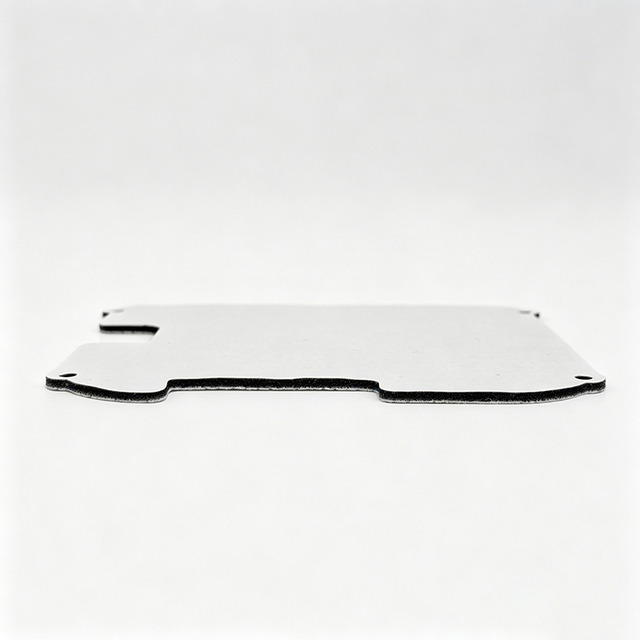
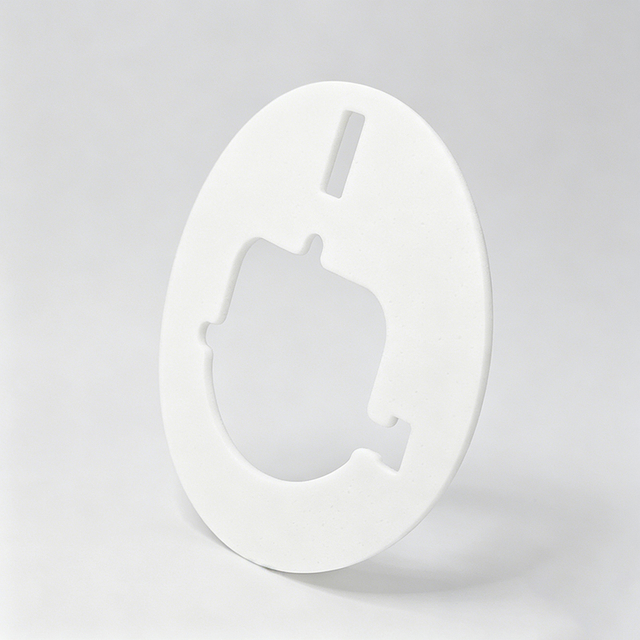
Cabin interior acoustic liner components use melamine sound-absorbing foam as the core base material. The surface can be laminated with a PU protective film and processed through thermoforming technology to perfectly fit the irregular curved surfaces of outdoor unit shells.
Inside the sealed compressor cabin, sound waves emitted by the compressor repeatedly reflect and superimpose between the inner walls of the sheet metal shell, forming a reverberation effect that amplifies the noise intensity inside the cabin. Noise radiates outward through the shell, increasing the whole-machine noise. Installing this liner on the inner wall of the cabin can directly weaken the sound source energy directly radiated by the compressor, significantly reduce the reverberation of sound waves inside the sealed cabin, reduce the sound energy inside the cabin from the source, and ultimately reduce the noise output of the unit to the outside. The surface composite protective film can also prevent oil stains and condensed water from directly invading the foam body, avoiding blockage of pores by oil and water vapor, preventing sound absorption performance from declining, and extending the service life of the material. The thermoforming process can produce irregular shapes according to the curvature of the shell, with high fit and simple assembly, suitable for large-scale industrialized production.
(2) Equipment Vibration Isolation Buffer Layer
The vibration isolation buffer layer is mainly laid on key vibration transmission paths such as compressor mounting bases and refrigerant pipeline vibration damping points. Air conditioning compressors generate continuous vibration during operation. Vibration energy is transmitted along the base and metal pipelines to the sheet metal shell of the whole machine, exciting shell resonance and generating huge secondary noise.
Junhua melamine foam has dual properties of sound absorption and damping vibration reduction. The buffer layer can effectively absorb vibration energy, efficiently block vibration from transmitting outward along metal structures, and weaken the low-frequency hum caused by structure-borne sound. At the same time, the material itself is lightweight and will not add extra weight to the whole machine. The thickness selection is flexible, saving internal installation space of equipment. Unlike ordinary rubber vibration isolation pads that are heavy and only specialize in vibration isolation without sound absorption capability, this buffer layer simultaneously considers both vibration isolation and noise reduction. While suppressing vibration transmission, it can also absorb noise in local spaces, achieving dual control of vibration and noise.
(3) Air Pipeline Silent Acoustic Modules
Air conditioning fan rotation and airflow inside ducts generate aerodynamic noise. Airflow turbulence noise is also an important component of air conditioning noise. Junhua can customize airflow sound absorption modules, silent flow guide structures, and various silencer components according to equipment needs. Placing modules at airflow channels such as air ducts and air outlets can absorb noise generated by airflow disturbance, optimize the airflow field, and reduce fan turbulence noise. Used together with cabin interior liners and vibration isolation buffer layers, it simultaneously controls structural noise and airflow noise, achieving comprehensive noise management of the whole machine and avoiding the situation where only compressor noise is handled while ignoring duct airflow noise, resulting in noise reduction effects not meeting expectations.

Comprehensive Engineering Application Value Compared to Traditional Sound-Absorbing Materials
Currently, HVAC systems are rapidly iterating toward high energy efficiency, low noise, and lightweight design. Traditional single-function sound-absorbing materials are increasingly unable to meet complex engineering needs. As a multi-functional integrated acoustic material, Junhua melamine foam perfectly matches the R&D needs of next-generation low-noise HVAC systems and has five core advantages at the engineering implementation level.
First, lightweight material that does not increase the weight of the AC unit. With a lower material density, even large-area use of acoustic components will not cause the outdoor unit to increase in weight, will not increase the load-bearing pressure on brackets, and will not increase logistics and transportation costs, matching the lightweight development trend of whole machines.
Second, full-frequency acoustic processing capability that balances high and low-frequency noise control. Traditional materials can often only handle single-frequency noise. High frequencies are good but low frequencies are insufficient, and thickening takes up space. Melamine foam can simultaneously handle compressor low-frequency vibration noise and fan airflow high-frequency noise, achieving wide-frequency noise reduction, reducing the superposition of multiple acoustic materials, and simplifying material types.
Third, outstanding vibration reduction performance that simultaneously solves the two major needs of sound absorption and vibration isolation. Traditional sound-absorbing cotton mostly only absorbs airborne sound and has almost no improvement effect on structure-borne vibration noise, requiring additional rubber vibration isolation pads and other components. Junhua melamine foam integrates sound absorption and damping vibration reduction in one material, addressing both airborne noise and structure-borne sound with a single material, simplifying the acoustic design of whole machines.
Fourth, intrinsic flame retardant safety properties matching high-temperature equipment cabins. Compressor cabin temperatures vary greatly. Intrinsic B1-level flame retardancy does not require chemical flame retardant additives, avoiding the risk of flame retardant aging and precipitation. Safety performance is stable under long-term high-temperature conditions, meeting HVAC equipment safety standards and reducing product safety hazards.
Fifth, excellent thermoforming processing performance, customizable for various irregular acoustic components, adapting to diverse models. AC outdoor unit shells and cavity shapes vary greatly across different series. The material can be processed into curved surfaces, grooves, and other irregular structures through hot pressing technology, closely fitting the internal structure of shells. Whether it is small household outdoor units or large commercial multi-split units, all can be adapted to meet the customization needs of different models.
In summary, choosing Junhua melamine foam can reduce the combination of multiple different acoustic materials, reduce material types, simplify the internal structure of whole machines, achieve better noise reduction effects in limited equipment space, and balance multiple demands of performance, safety, and cost.
Junhua One-Stop Structural Acoustic Customization Technical Services
Junhua is not limited to simply supplying acoustic materials, but provides full-process acoustic engineering technical support services for air conditioning equipment manufacturers. AC noise reduction is a systematic engineering project. Different models have different power sizes, cabin structures, dominant noise frequencies, and internal temperature conditions. There is no universal material solution that can fit all products. Junhua can combine manufacturers' prototype noise test data, equipment structure drawings, and actual working conditions to customize exclusive noise reduction solutions for customers.
First, material density gradient optimization. Targeting the key noise frequency bands obtained from equipment testing, directionally adjust the density of foam materials to match target noise peaks, maximize noise reduction effects, and avoid material performance excess or insufficiency.
Second, precise compression ratio debugging. Within the limited installation space of the compressor cabin, debug the compression ratio of materials to balance material installation space utilization with sound absorption and vibration reduction performance. Excessive compression of foam will squeeze pores and reduce sound absorption effects; insufficient compression will cause loose assembly and affect vibration reduction effects. Professional debugging ensures stable performance of batch products.
Third, composite protective layer integrated integration. According to the oil stain and condensed water conditions inside the equipment, select composite PU film, non-woven fabric, and other protective layers for integrated processing to improve the material's moisture resistance, oil resistance, and wear resistance, extending the service life of materials in the whole machine.
Fourth, modular standard acoustic component development. For customers' serialized models, develop standardized acoustic components, simplify whole machine assembly processes, reduce on-site assembly difficulty, ensure consistent acoustic performance of every unit under mass production conditions, and reduce production-side management difficulty.
From pre-stage noise test analysis, solution design, and sample prototyping testing to later-stage mass production delivery, complete technical support is provided to help equipment manufacturers quickly complete the development and implementation of silent models.