Views: 0 Author: Site Editor Publish Time: 2026-11-17 Origin: Site


Demystifying Melamine Foam
A High-Performance Foam That Delivers Both Sound Absorption and Sound Insulation
In noise control projects, clients often treat sound absorption and sound insulation as one and the same: the design is finished, the budget is spent, and the noise level on site is still over the limit. The problem is rarely about whether the material is expensive — it is about whether the right approach was chosen. With its three-dimensionally interconnected open-cell structure and inherent flame retardance, melamine foam (also known as melamine resin foam) handles both absorption and insulation within a single noise control assembly, making it a preferred material for industrial, architectural and rail transit noise reduction.
1. Absorption vs. Insulation: One Dissipates, One Blocks
Sound absorption deals with sound that has already entered a space. Porous materials convert acoustic energy into heat and dissipate it, eliminating echoes and reverberation and solving problems such as excessive echo, muddy sound and poor speech intelligibility. Performance is usually measured by the Noise Reduction Coefficient (NRC) and reverberation time. Sound insulation deals with sound that has not yet entered the space. It relies on material mass and structural sealing to block transmission, keeping noise from escaping and outside noise from coming in. Performance is usually measured by sound insulation in decibels.
The two follow completely different physical paths: absorption consumes, insulation blocks. A machine room can suffer from both at once — the roar of the equipment inside is reverberation, while low-frequency noise coming through the wall is an insulation problem. They must be treated separately and cannot be solved by the same measure.
Three selection mistakes are common. First, gluing a layer of acoustic foam onto the outside of an insulating wall and expecting it to block sound — surface density does not change, so the insulation gain is almost zero. Second, insulating without absorbing — the inside of a sound enclosure is left bare, reverberation builds up, and the measured insulation falls far below the design value. Third, looking only at material thickness while ignoring cavity depth and sealing — a single unsealed gap can undo the entire assembly.
2. Strong Inherent Absorption That Efficiently Dissipates Noise
Three-Dimensional Open Cells: Sound Gets In, Hardly Gets Out
Melamine foam has an open-cell, three-dimensionally interconnected network with porosity above 99% and a density of only 8-12 kg/m³. When sound enters the material, air particles oscillate back and forth through the tortuous pores and rub against the cell walls, converting acoustic energy into heat. The complex channels also lengthen the propagation path, forcing sound to take repeated detours inside the material and increasing losses further. As a result, its Noise Reduction Coefficient reaches NRC ≥ 0.85, with outstanding absorption in the mid and high frequencies.
Mid and high frequencies determine the harshness of a space and its speech intelligibility, while low frequencies determine the boominess and pressure. Low frequencies have long wavelengths and strong penetration, and a thin layer of foam alone cannot fully absorb them — a foam-plus-cavity combination is required: the foam layer and the air cavity behind it form a spring-mass resonance system that tunes a specific frequency band into the material to be dissipated. The deeper the cavity, the lower the frequency affected, which is why thin foam with a deep cavity is a common engineering approach to controlling low frequency.

Compared with Conventional Absorbers: Flame Retardance, Cleanliness, Temperature Resistance
Compared with glass wool and rock wool, the biggest difference is inherent flame retardance. Melamine foam is itself a flame-retardant material and requires no added flame retardants. It reaches UL 94 V-0 rating and GB 8624 Class B1 (Classification for Burning Behavior of Building Materials and Products, GB 8624-2012), self-extinguishes once the ignition source is removed, produces no melting drips and generates low smoke with low toxicity — a clear advantage in crowded public spaces and in sealed cabins with strict smoke toxicity requirements.
Next is installation and maintenance. It is dust-free and does not shed fibers, so cutting and installation require no extra protective equipment, and unlike fibrous materials it will not settle or release fly ash under long-term vibration. For clean rooms, hospitals and electrical enclosures where dust is a concern, this matters more than the absorption coefficient.
The service temperature range is -160 °C to 240 °C, and the material also provides excellent thermal insulation, with a service life of more than 20 years. A single layer can act as both absorber and insulator, reducing the number of structural layers and installation steps — particularly cost-effective for space-constrained parts such as ducts, enclosures and cabins.
Typical Absorption Applications
Where only sound dissipation is required, boards can be used directly: lecture halls, gymnasiums and studios use them to control reverberation and improve speech intelligibility; metro carriages and new-energy vehicle interiors use them to absorb cabin echo; fan duct linings and equipment inner walls use them to absorb airflow and mechanical noise.
3. Composite Structures Unlock Insulation for Dual-Function Noise Control
Why Bare Foam Cannot Serve as an Insulation Barrier
The core of sound insulation is mass and sealing. According to the mass law, insulation increases with surface density, yet melamine foam has a density of only 8-12 kg/m³ and therefore extremely low surface density, so sound passes straight through. Being an open-cell structure, it is also permeable to airflow and does not form a sealed surface. Bare foam is an excellent absorber, but not a qualified insulation barrier.
How the Classic Three-Layer Composite Works
In engineering practice, melamine foam serves as the acoustic core and is combined with heavy materials such as damped acoustic panels and steel plates to form a composite noise control system: heavy sound insulation panel (steel plate or damped acoustic board) + melamine foam acoustic layer + perforated protective facing. Each layer does its job, and the assembly delivers both absorption and insulation at once.
The insulation barrier: the outer steel plate or damped acoustic board blocks transmission through its mass, isolating noise from escaping or entering. The role of the damping layer is often underestimated — thin metal panels resonate when excited by sound waves, and the damping layer converts vibration into heat, clearly suppressing the insulation dip near the critical frequency.
The internal absorption core: the melamine foam in the sandwich absorbs noise reflected back and forth inside the cavity, suppresses cavity resonance and eliminates hollow echo, preventing noise from building up inside the enclosure. This directly determines measured performance: without internal absorption, reverberation inside a sound enclosure raises the sound pressure level, and measured insulation is often well below the theoretical value.
The perforated protective facing: protects the foam from dust, oil and mechanical damage while allowing sound to enter freely without loss of absorption. Hole diameter, open area ratio and panel thickness together determine sound transmission; if the open area ratio is too low, sound is blocked outside the foam and the absorber does nothing.
Key Points in Structural Design
Several parameters must be considered together: surface density sets the insulation ceiling, cavity depth governs low-frequency performance, foam thickness and bulk density govern mid and high-frequency absorption, and the open area ratio of the facing determines whether sound can get in. In addition, all gaps, holes and cable penetrations must be sealed, and sound bridges — rigid connections through studs and brackets — should be broken wherever possible. Noise control assemblies usually fail not because of the material, but because of one unsealed gap.
4. Applications Across Industries
Industrial Equipment Enclosures, Generator and Compressor Silencers
The steel shell provides insulation while melamine foam is laminated inside. It blocks equipment noise from spreading outward and absorbs the booming echo inside the enclosure, reducing panel resonance. Its inherent flame retardance and temperature resistance allow long-term operation near motors and pump sets without the aging and sagging associated with fibrous materials.
HVAC Ducts and Fan Silencers
The metal casing prevents duct noise from radiating outward while melamine foam lines the inner wall: on one hand it keeps duct noise from leaking, on the other it absorbs fan airflow noise. The open-cell structure offers low airflow resistance and does not affect ventilation efficiency, making it widely used in central air conditioning and exhaust systems. In high-humidity environments, hydrophobic treatment prevents condensation and dust accumulation from degrading absorption.
Energy Storage Cabins, Battery Cabinets and Electrical Enclosures
Sheet metal enclosures act as the insulation barrier while melamine foam is bonded to the inner walls, keeping fan noise from escaping and eliminating cabin reverberation. Its inherent flame retardance and temperature resistance meet the strict safety standards of the energy storage industry, and its low weight adds no extra burden to cabinet structures or lifting.
Acoustic Partitions and Equipment Room Dividers
Damped acoustic panels on both sides form the insulation body, with melamine foam filling the wall cavity. An unfilled cavity tends to resonate and produces a dip in the insulation curve; once absorptive material is added, sound inside the cavity is dissipated, resonance is weakened and the wall's insulation improves. Suitable for noise isolation in workshops, laboratories and machine rooms.
Rail Transit and New-Energy Vehicle Interiors
The vehicle body shell acts as the insulation barrier with melamine foam installed on the inside, blocking road and wind noise from entering the cabin while absorbing interior echo. Lightweight construction and fire safety are its two trump cards here: it reduces vehicle weight and helps meet the fire performance and smoke toxicity requirements of EN 45545-2:2020+A1:2023 for rail applications.
Integrated Noise Reduction and Thermal Insulation for High-Temperature Pipes and Pumps
An outer acoustic panel blocks noise leakage while an inner layer of melamine foam wraps the pipe, delivering insulation, internal absorption and thermal insulation in one. Ideal for heat distribution pipes, boilers and high-temperature pump sets, saving the space and labor of a separate insulation layer.
Acoustic Spaces in Public Buildings
Walls in schools, hospitals and studios use composite acoustic construction with melamine foam filling the cavity: this prevents sound from transferring between rooms, controls indoor reverberation and improves hall acoustics. Being dust-free and fiber-free makes it suitable for crowded spaces where air quality is a concern.

5. Selection Tips
First, identify the type of need. If the goal is only to reduce echo, reverberation boom or equipment internal noise, use melamine foam boards directly and leverage their absorption, flame retardance and thermal insulation. If the goal is to block transmission and achieve true sound insulation, choose the composite solution of melamine foam plus heavy insulation panels for integrated absorption and insulation design.
Second, determine the parameters. In spaces dominated by mid and high frequencies, thin boards with a moderate cavity work well; for equipment with pronounced low frequency, increase cavity depth and surface density; for projects with explicit fire ratings, verify the applicable standard and material test reports before discussing absorption coefficients.
Third, installation and maintenance. Sealing takes priority over thickness — all joints and penetrations must be sealed; avoid rigid sound bridges; specify the open area ratio of the facing according to transmission requirements; and provide access openings for later replacement.
6. Customization and Processing
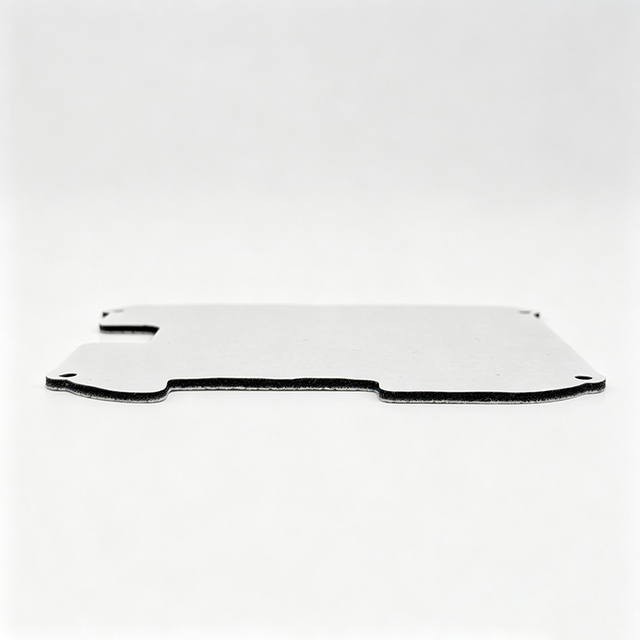
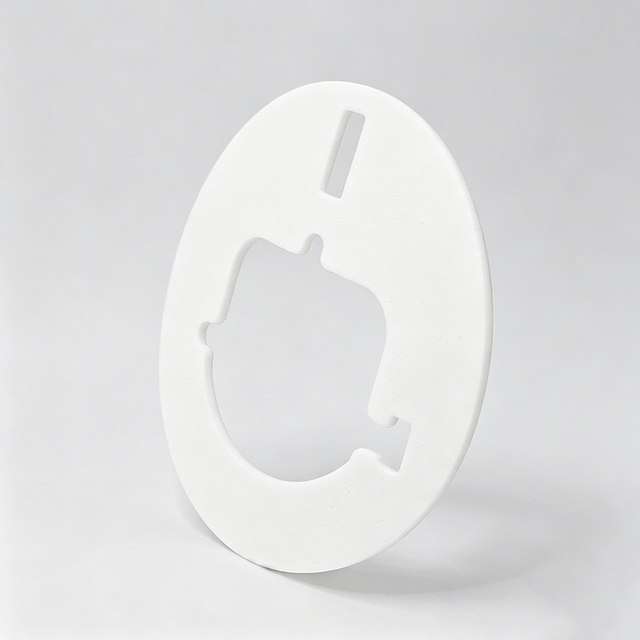
We offer self-adhesive backing, aluminum foil facing, hydrophobic treatment, wave-profile foam, die-cut custom shapes and pipe shell fabrication. Boards and custom parts are produced to order and suit a wide range of industrial and architectural noise control projects.
7. Conclusion
In short: melamine foam delivers top-tier absorption on its own; combined with insulation panels into a complete system, it achieves both absorption and insulation — one material, two functions, with flame retardance, thermal insulation and light weight. Noise control is not about stacking materials thicker; it is about putting each material where it belongs.