Views: 0 Author: Site Editor Publish Time: 2026-09-02 Origin: Site


Thermal insulation properties of melamine sponge
The insulation materials currently commonly used in industry and construction fields each have their own advantages, but there are also common shortcomings that are difficult to avoid:
First, the function is single. Traditional insulation materials are often only good at thermal insulation, but do not have sound absorption capabilities, and may not meet high-level fire protection requirements. In actual projects, multiple materials have to be purchased at the same time and laid in layers, which not only increases costs but also lengthens the construction period.
The second is health and environmental risks. Fiber materials such as glass wool and rock wool will produce fine fiber dust during construction and use, which can irritate the skin and respiratory tract. Long-term exposure may affect health. Moreover, once the fibers fall off, they will also pollute the indoor air, which is especially unfriendly to places with high cleanliness requirements.
Third, the fire protection performance is not up to standard. Organic foam materials such as polyurethane and polystyrene have good thermal insulation properties, but their flame retardant properties are generally poor. They produce a large amount of toxic smoke and molten drippings when burned, posing major safety hazards in densely populated public buildings and industrial sites.
JunhuaThe emergence of melamine sponge is precisely to break these pain points - integrating the five properties of heat insulation, sound absorption, flame retardant, lightweight and environmental protection, using one material to solve multiple problems.
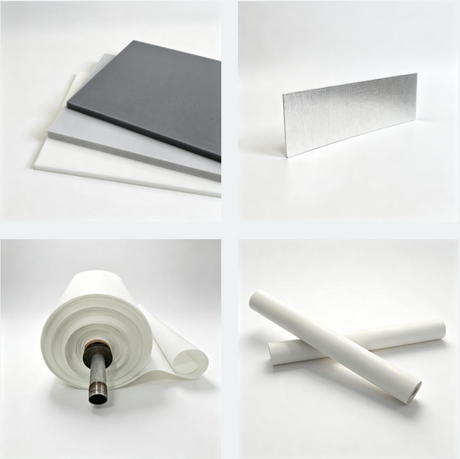
JunhuaMelamine sponge is an open-cell functional sponge insulation product made of melamine resin as raw material, foamed and solidified. A three-dimensional network of fine pore structures is formed inside the material. The overall texture is light and has both toughness and rigidity.
Thermal conductivity is the core indicator for measuring the insulation ability of insulation materials. The lower the value, the stronger the insulation performance. JunhuaThe thermal conductivity of melamine sponge is 0.035 W/(m·K), which is equivalent to traditional insulation materials such as glass wool and rock wool, and better than EPS foam (and XPS foam).
With the airgel composite modification process, Junhua the thermal conductivity of melamine sponge can be further reduced to below 0.015 W/(m·K), entering the ranks of super thermal insulation materials. This kind of composite product is especially suitable for scenarios with limited space but high thermal insulation requirements, such as portable energy storage, precision electronics, power batteries, etc.
The temperature resistance range of insulation materials determines the scenarios in which it can be used. JunhuaThe long-term use temperature range of melamine sponge is -160℃ to +240℃, and it can withstand higher temperature shocks in the short term. This temperature resistance is at the leading level among organic insulation materials.
At the high temperature end, the long-term temperature resistance of 240°C far exceeds that of polyurethane foam, polystyrene foam, and rubber and plastic insulation. It can be directly used in industrial high-temperature pipelines, engine rooms, heat treatment equipment, etc., without aging, deformation, or performance degradation due to long-term heating.
At the low temperature end, the extreme cold resistance of -160°C is also excellent. Melamine sponge still maintains good elasticity and structural integrity in extremely low temperature environments. It will not be brittle like polyurethane foam, nor will it shrink like polystyrene board. This makes it an ideal choice for low-temperature insulation scenarios such as LNG pipelines, cold chain cold storage, etc.
One material covers both high and low temperatures, greatly broadening its application boundaries and simplifying supply chain management for customers.
Fire safety is an insurmountable red line for insulation materials. JunhuaThe flame retardant performance of melamine sponge comes from the molecular structure itself - melamine resin contains high nitrogen content. When exposed to fire, it decomposes and releases inert gases such as nitrogen to dilute the oxygen concentration. At the same time, a dense carbonized insulation layer is quickly formed on the surface to block the inward transfer of heat and air.
This intrinsic flame retardant method is essentially different from additive flame retardant: it does not rely on the addition of flame retardant agents, so the flame retardant performance is long-lasting and reliable, and will not decay over time due to the migration of flame retardants, nor will harmful substances be precipitated to affect the environment.
JunhuaMelamine sponge natively reaches the highest flame retardant level of UL94 V-0 and GB 8624 B1 flame retardant level. It does not drip or melt when burned, has low smoke production, and has weak smoke toxicity. This is an extremely critical safety guarantee for places with high fire protection levels such as airports, computer rooms, and large commercial buildings.
JunhuaThe density of melamine sponge is only 8-12 kg/m³. What is the concept? It is only 1/3 of traditional glass wool and 1/10 of rock wool. The value of this ultra-lightweight property is multifaceted:
—— Reduce the structural load of buildings and equipment. For scenarios such as long-span building roofs, lightweight vehicle design, and energy-saving renovation of old buildings, weight reduction means safer structures, freer design, and lower renovation costs.
——Reduce logistics and construction costs. The material is lightweight and the transportation cost is low. It can be transported and cut by one person, and the installation efficiency is greatly improved. Workers do not need heavy equipment and complex auxiliary tools, and the construction period is significantly shortened.
——No additional burden will be added. In weight-sensitive fields such as automotive, Rail Transit, and aviation, every gram of weight saved is valuable. The ultra-lightweight properties of melamine sponge make it naturally competitive in these areas.
JunhuaThe biggest differentiated advantage of melamine sponge is that it has excellent thermal insulation performance and sound absorption and noise reduction performance. The three-dimensional open pore structure of the material not only locks in air for thermal insulation, but also allows sound waves to enter the interior and dissipate sound energy through friction.
The sound absorption performance of NRC≥0.85 means that it can absorb more than 85% of the incident sound energy. In scenarios such as HVAC ducts, equipment rooms, and industrial units, a layer of melamine sponge can solve the two problems of insulation and noise reduction at the same time. There is no need to purchase insulation materials and sound-absorbing materials separately, and to construct them in layers.
This thermo-acoustic integration feature can simplify design plans, reduce material categories, reduce construction complexity, and reduce overall project costs, which is unmatched by traditional single-function insulation materials.
The industrial sector is the largest consumer of thermal insulation materials. With a large number of high-temperature pipelines and equipment, the demand for insulation materials continues to be strong, and the requirements are becoming higher and higher.
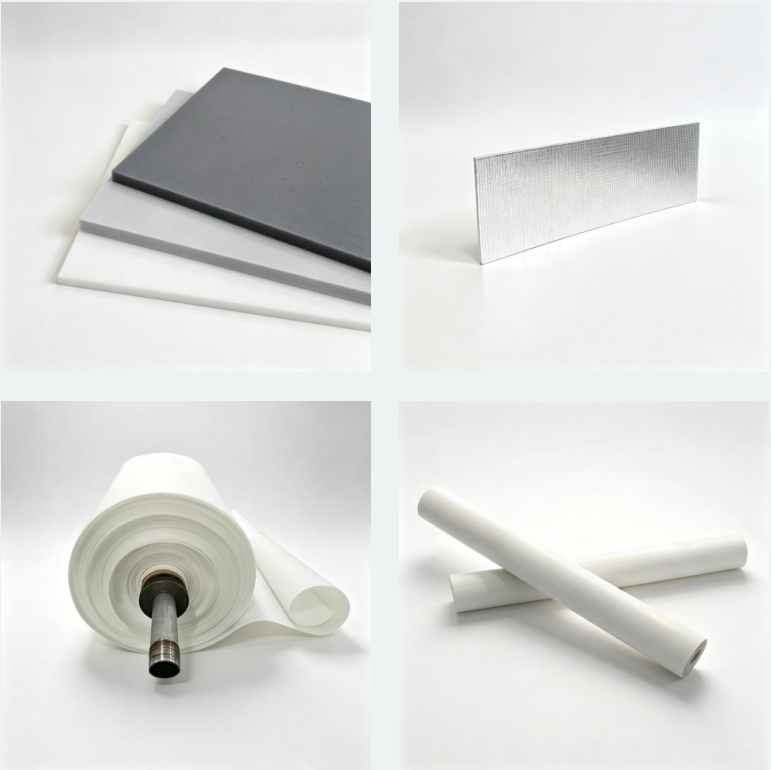
Industrial pipelines are like the blood vessels of a factory, transporting thermal fluids, chemical raw materials, process media, etc. These pipes often have high temperatures and long distances. If the insulation is not good, the heat loss will be alarming. With standard insulation, the heat loss can be reduced by more than 80%.
JunhuaMelamine sponge has flexible and diverse applications in industryPipe Insulation. Small-diameter pipes use prefabricated pipe shells and are assembled directly on site. They are easy to install, fit tightly, and have a neat appearance. Special-shaped parts such as large-diameter pipes, elbows, valves, flanges, etc. are wrapped and cut with sponge sheets or coils on site, which has strong adaptability.
After the composite aluminum foil surface layer is added, the thermal insulation effect is further improved - the aluminum foil can reflect thermal radiation and reduce radiation heat transfer losses; at the same time, it protects the sponge from water vapor, dust and mechanical damage, extending its service life. The surface of aluminum foil is clean and beautiful, and it is also easy to clean and maintain daily.
Compared with rock wool and glass wool shells, Junhua melamine sponge does not prick hands, does not drop slag, and is dust-free. Construction workers can operate it with bare hands and do not need to wear special protective equipment such as masks and gloves. The construction efficiency is high and the occupational health risks are low.
Injection molding machines, die-casting machines, forging furnaces, heat treatment furnaces, generator sets, compressors, fans... There are two common problems with heavy equipment in factories: high surface temperature and loud operating noise. High temperature not only wastes energy, but may also burn operators; high-intensity noise harms workers" hearing health.
JunhuaMelamine sponge sheets can be directly laid on the inner wall of the equipment casing to form a dual barrier of heat insulation and sound absorption:
——Thermal insulation level: effectively blocks the internal heat of the equipment from radiating outward, reduces the temperature of the external surface of the equipment, protects the safety of operators, and at the same time reduces heat radiation in the workshop and reduces air conditioning energy consumption.
——Sound absorption level: Absorb mechanical noise and air flow noise generated by equipment operation, reduce the overall noise level in the workshop, improve the working environment, and reduce the risk of occupational diseases.
The product has a small weight and can be processed into any shape. It can not only improve the workshop working environment, but also isolate high temperatures and protect peripheral parts. It can be processed into coils, entire panels, and precision special-shaped parts according to drawings to meet the customized needs of various types of equipment.
With the rapid development of the cold chain logistics industry, the market demand for low-temperature insulation materials continues to grow. Cold storage, refrigerated trucks, cold chain boxes, LNG pipelines and other scenarios have high requirements for the low-temperature performance, fire resistance and durability of insulation materials.
JunhuaMelamine sponge still maintains good elasticity and structural integrity in an extremely low temperature environment of -160°C. It will not be brittle at low temperatures like polyurethane foam, nor will it shrink and deform like polystyrene board. At the same time, B1 level flame retardant performance is also safer than traditional organic insulation materials, and is especially suitable for cold storage and cold chain facilities with high fire protection requirements.
In addition, melamine sponge does not absorb water, has good anti-mildew properties, and has stable performance in long-term use in high-humidity environments. It will not reduce the insulation effect due to moisture absorption. This is an important long-term advantage for cold storage that is subject to high humidity all year round.
Building energy consumption accounts for nearly one-third of the total energy consumption in society. Improving the insulation performance of building envelopes is an important way to reduce building energy consumption and achieve dual carbon goals. JunhuaMelamine sponge provides a new integrated solution for building thermal management.
Large-span metal roofs and large-area glass lighting skylights are commonly used in large public buildings such as airport terminals, high-speed rail stations, convention and exhibition centers, and sports venues. These designs not only bring a good sense of space and natural lighting, but also allow a large amount of solar radiation heat to flow into the room, resulting in a surge in indoor heat load and high air conditioning energy consumption in summer.
JunhuaMelamine sponge provides a lightweight thermal insulation solution for this type of building: a sponge insulation layer is laid on the inside of the metal roof to block heat conduction from top to bottom; sponge components are filled in the sandwich structure of the glass skylight to effectively block solar radiation heat; sponge sound-absorbing insulation is arranged in the ceiling cavity to take into account both thermal insulation and noise reduction.
Since the material density is only 8-12 kg/m³, it will not add significant load to the long-span roof structure, and the building design does not require additional structural reinforcement for thermal insulation materials. This has important economic and safety value for long-span buildings dominated by steel structures. The service life is ≥20 years, and it is moisture-proof and non-powdering, which is far better than the 5-10 year service life of traditional insulation materials.
If the air ducts of the central air conditioning system are not well insulated, a large amount of hot and cold energy will be lost along the way, resulting in poor terminal effects and increased operating costs. At the same time, the air duct is also an important noise transmission channel in the building. Fan noise and air flow noise will be transmitted to various rooms through the air duct.
JunhuaMelamine sponge air duct lining is a solution that simultaneously solves the two problems of insulation and sound attenuation: full-section sound absorption, the sponge is directly attached to the inner wall of the air duct, continuously absorbing noise throughout the entire length of the air duct, and the sound attenuation capacity is much higher than that of a single-point silencer; thermal insulation and energy saving, and also plays the role of air duct insulation, reducing the loss of hot and cold energy in the air duct, reducing the energy consumption of air conditioning operations; fire safety, B1 flame retardant, in line with the fire protection requirements of ventilation and air conditioning systems.
Compared with traditional fiber-cotton air duct insulation, Junhua melamine sponge has no fiber shedding and no dust pollution, is easy to process and cut, and has excellent fire protection and sound-absorbing properties. It avoids the spread of noise from air duct operation and ensures a clean environment in computer rooms and public areas. The hydrophobic modified version can also resist condensation and mildew in pipes and is suitable for humid environments.
Technical spaces such as equipment rooms, boiler rooms, ventilation rooms, elevator shafts, and pipe wells in buildings are where noise and heat are concentrated. If not handled properly, noise and heat can travel outward through walls, ducts and ventilation systems, affecting the comfort of the surrounding area.
JunhuaMelamine sponge can solve the three needs of heat insulation, noise reduction and fire protection in one stop in these scenarios: sponge sound-absorbing insulation boards are laid on the walls and ceiling of the machine room to reduce the reverberation noise in the machine room and reduce the heat transfer to the outside; the sponge is attached to the elevator shaft to absorb the mechanical noise and airflow noise generated by the operation of the elevator, and also plays a thermal insulation role; the sponge wraps the pipes in the pipe well, both for insulation and noise reduction.
Different from the main body insulation of the building, Junhua melamine sponge focuses more on the equipment, pipes, shell lining and other scenes of the building technical space. The multi-function feature of one machine can simplify the matching of building materials, reduce the types of materials, and shorten the construction period.
In the fields of transportation and transportation, the space is compact and the environment is complex, and the requirements for thermal insulation materials are higher and thinner. JunhuaMelamine sponge plays a unique value in these fields due to its thinness, flame retardancy and customizable processing properties.
The NVH (noise, vibration and harshness) and thermal management performance of the automotive industry are directly related to the driving experience and product quality. The popularity of new energy vehicles has brought new challenges - battery thermal management and high-frequency motor noise.
JunhuaThe application of melamine sponge in automobile thermal insulation includes: hood heat-insulating and sound-absorbing pads, which block the high temperature and noise of the engine compartment from being transmitted to the cab, and protect surrounding plastic parts and wiring harnesses; roof/ceiling filling, which effectively absorbs road noise and wind noise, while reducing the weight of the roof and improving the high temperature of the roof after sun exposure in summer; battery pack protection, combined with airgel composite modification, forms an ultra-thin insulation layer, which is used for thermal protection of power batteries and delays heat diffusion.
Products that comply with IATF 16949 automotive industry quality system standards are low VOC, low odor, and friendly to interior air quality. They are the preferred supporting materials for OEMs and first-tier suppliers. Lightweight materials effectively reduce the weight of the vehicle and optimize vehicle energy consumption performance.
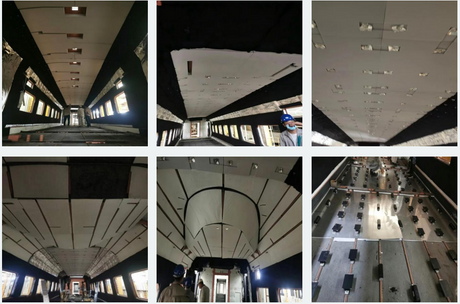
Rail TransitThe thermal insulation of tools and ships has extremely strict requirements for fire safety. High-speed rail carriages, subway trains, and ship cabins are all confined spaces. Once a fire breaks out, it will be difficult for people to escape and the consequences will be disastrous.
JunhuaThe inherent flame retardant properties and low-smoke and non-toxic performance of melamine sponge perfectly comply with Rail Transit industry fire protection standards such as EN 45545. Its thermal insulation applications in Rail Transit include: cabin interior ceiling and side wall filling, which combines sound insulation and noise reduction with fire protection and heat insulation; equipment cabin lining, thermal insulation, sound absorption and flame retardant triple protection for traction converters and electrical cabinets; HVAC system duct lining to reduce ventilation system airflow noise and maintain pipe thermal stability.
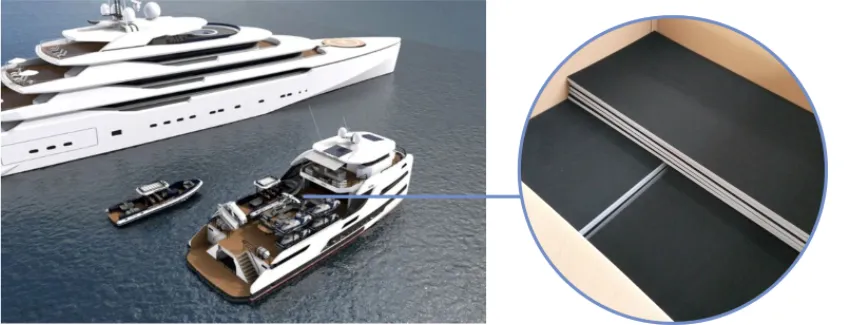
In the field of ships, melamine sponge has good chemical stability, acid and alkali resistance, salt spray resistance, non-water absorption, and is suitable for use in marine environments. Its fireproof performance meets the relevant IMO standards, and its low-smoke and non-toxic properties are particularly important in closed cabins.
In industries such as home appliances, electronics, and energy storage, products are developing in the direction of thinness, lightness, high power, and safety. The internal space is becoming more and more compact, the power density is getting higher and higher, and the requirements for thermal management materials are becoming more and more stringent.
JunhuaTypical applications of melamine sponge inElectronics & Electrical Appliances thermal insulation include: fan volutes and cavity insulation layers of air conditioners, range hoods, dishwashers and other home appliances to reduce equipment operating noise and improve thermal insulation effects; hair dryers, curling irons The thermal insulation layer of Tongmei power generators can control the shell temperature within a safe range; the battery insulation layer of portable energy storage products and power banks, the airgel composite model can achieve good thermal insulation with an ultra-thin thickness of 0.2-3mm, helping the product pass 3C safety certification.
Using airgel composite melamine sponge as the thermal insulation layer can effectively reduce the surface temperature of the shell, while providing flame retardant and buffering protection, improving the overall safety level of the product.
Only by choosing the right materials and using them well can you achieve the best thermal insulation effect. The following gives professional suggestions from two aspects: selection and processing.
When customers purchase Junhua melamine sponge thermal insulation materials, it is recommended to make a comprehensive evaluation based on the following dimensions:
Operating temperature: Confirm the maximum and minimum temperatures of the working scene, and select product specifications that match the temperature range.
Insulation thickness and thermal conductivity: Calculate the required thickness of the insulation layer based on the target heat loss or surface temperature requirements. The standard type (0.035 W/(m·K)) is selected for ordinary working conditions, and the airgel composite model (0.015 W/(m·K)) is available for high-end products with limited space.
Fire protection standards: For scenes with high safety requirements such as public buildings, Rail Transit, and energy storage, the fire protection level must be verified strictly against local regulations. JunhuaThe product is natively rated B1/UL94 V-0, which can meet the requirements of most scenarios.
Noise reduction requirements: If there is a noise problem at the same time, melamine sponge can be directly used to achieve integrated thermo-acoustic treatment without adding additional sound-absorbing materials.
Humidity of use environment: It is recommended to use hydrophobic and moisture-proof products in humid areas, underground spaces, and water-facing areas.
Industry testing specifications: Different industries have their own testing standards and certification requirements (such as automotive IATF 16949, rail transit EN 45545, shipbuilding IMO, etc.). It is necessary to confirm in advance whether the product has the corresponding qualifications.
The actual performance of the same product may vary due to thickness, covering material, and installation environment. For new working conditions, it is recommended to conduct sample actual testing and prototype testing first.
Junhua has self-research capabilities in the entire chain from raw material research and development, foam production to deep processing, supports full-process deep processing customization, and can meet various complex installation scenarios:
Flat cutting and vertical cutting: provide standard thickness plates and coils to meet the needs of general thermal insulation projects;
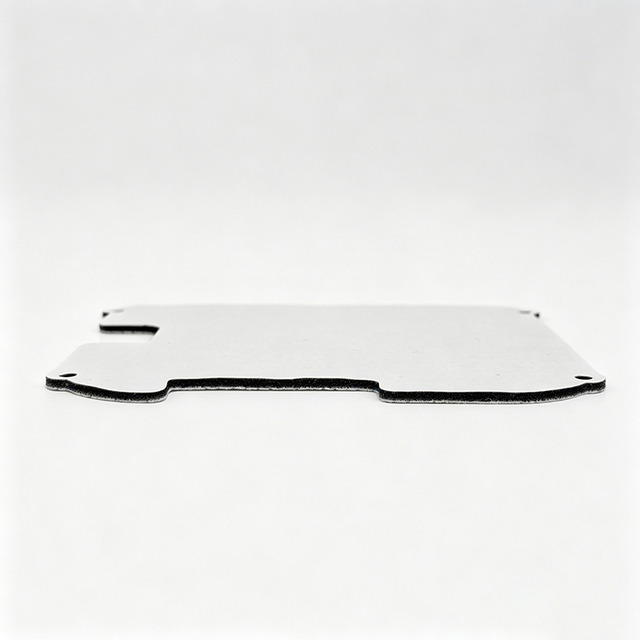
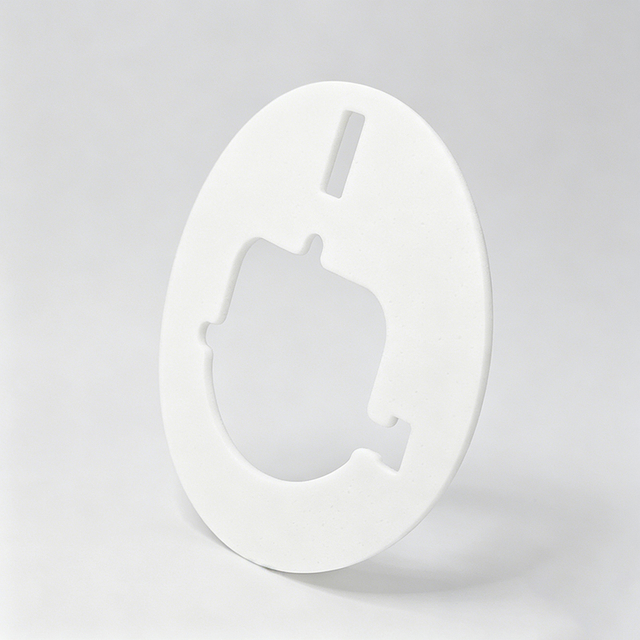
Die-cutting: Precisely die-cut various plane shapes according to the drawings, suitable for automated production line assembly;
CNC carving: Process complex three-dimensional special-shaped parts through CNC equipment, perfectly fitting special-shaped components and complex curved surfaces;
Thermal lamination and cold lamination: supports multiple lamination processes such as aluminum foil covering, non-woven fabric lamination, airgel lamination, etc.;
Adhesive treatment: single-sided or double-sided adhesive is provided, making installation more convenient and fitting closer;
Hydrophobic modification: The sponge is treated with hydrophobic and moisture-proof treatment, suitable for high-humidity environments.
It can provide a variety of finished product forms such as original blocks, sheets, coils, die-cut parts, CNC special-shaped parts, adhesive parts, composite laminates, etc., providing a one-stop solution from standard products to customized parts.
As a high-tech enterprise, Junhua New Materials has a complete guarantee system in terms of production capacity, quality and service:
Technology research and development strength: holds 23 independent research and development patents, 7 registered trademarks, continuous iterative optimization of formulas, and industry-leading product quality;
Global authoritative qualifications: UL, IATF 16949, ISO 9001/14001/45001, RoHS, REACH, BSCI full set of certifications, suitable for domestic and foreign bidding and product compliance certification;
Stable production capacity delivery: The standardized factory has an annual production capacity of 200,000 cubic meters, a warehousing space of 20,000 square meters, and fully automated equipment for flat cutting, vertical cutting, and die cutting to ensure on-time delivery of large batch orders;
Supporting technical services: Provide free sample delivery, third-party testing reports, exclusive selection plans for working conditions, and support actual measurement and verification of customer on-site working conditions.
From selection testing to batch delivery, Junhua provides full-process technical support to ensure that every project can take root and achieve the desired results.