Views: 0 Author: Site Editor Publish Time: 2026-09-04 Origin: Site


Melamine sponge sound insulation and heat insulation integrated material solution for new energy vehicles
JunhuaAutomotive melamine sponge is based on a proprietary formula system and foaming molding process. A high-proportion interconnected three-dimensional open-pore network structure is formed inside the material, which is different from ordinary closed-cell foam materials. It achieves multi-dimensional performance synergy in terms of acoustics, thermals, safety, and lightweight. Many key indicators have reached the level of high-end automotive materials.
Efficiently solve the unique noise problem of new energy vehicles. Melamine sponge has an ultra-high porosity. After sound waves enter the interior of the material, friction and damping dissipation occur in countless tiny pores, converting the sound energy into heat energy and consuming it. The noise reduction coefficient NRC can reach more than 0.85. It has outstanding absorption effects on wind noise, road tire noise, body structure resonance noise, especially the high-frequency howling noise of motors and reducers unique to new energy vehicles.
Unlike traditional sound-absorbing materials, which rely on increasing thickness and surface density in exchange for sound-absorbing effects, this material can achieve excellent mid- and high-frequency sound absorption performance in a relatively thin and light state. It not only saves the installation space of the vehicle, but also avoids the burden caused by excessive material weight, effectively improves the quietness of the cabin and enhances the user"s driving experience.

Empowering power battery thermal management system. The material"s thermal conductivity is as low as 0.035W/(m·K), and its extremely low thermal conductivity can effectively block the two-way transfer of heat. On the one hand, it can prevent external high temperatures from intruding into the interior of the battery pack. On the other hand, when the battery module generates abnormal local heat, it delays the spread of heat to surrounding cells, helps the battery maintain the optimal operating temperature range, reduces the energy consumption output of the battery thermal management system"s air conditioning and water cooling systems, and indirectly improves the energy efficiency of the entire vehicle.
In low-temperature environments in winter, the material can also reduce the internal heat loss of the battery, improve battery charge and discharge performance under low-temperature conditions, and reduce battery life losses caused by low-temperature attenuation.
Junhua Automotive melamine sponge does not require the addition of additional halogen flame retardant additives. It relies on its own molecular structure to achieve flame retardant effects. Its flame retardant grade reaches UL94 V0 level. It can self-extinguish when exposed to an open flame. It produces low smoke during combustion and does not release toxic halogen fumes. It complies with the strict fire safety requirements for automotive interiors and battery packs.
In the scenario where thermal runaway occurs in the power battery, the material can form a flame-retardant buffer barrier to slow down the spread of heat, buy valuable time for vehicle safety protection, and fully meet the relevant standards and specifications for new energy vehicle battery safety.
The material density can be as low as 8-12 kg/m³. Compared with traditional PU sound-absorbing foam and glass fiber mat, the weight per unit volume is significantly reduced. After the material is replaced in multiple parts of the vehicle, the additional dead weight of the body and battery pack can be effectively reduced. The weight reduction of the vehicle can be directly converted into an increase in cruising range, while also reducing the energy consumption of the vehicle. This is in line with the core demands of lightweight development of new energy vehicles and helps car companies gain competitive advantages in weight control and range performance.
Durable and stable performance under complex working conditions. This melamine sponge can work for a long time in a wide temperature range of -160°C to +240°C. It still maintains structural integrity in extremely cold temperatures, high-temperature baking in aircraft cabins, alternating hot and cold cycles, and high humidity environments. It is not prone to shrinkage, embrittlement, powdering, and deformation. It has excellent dimensional stability and resistance to moisture and heat aging.
Whether it is the high temperature in the cabin after exposure to the sun in summer or the extremely cold conditions in northern winter, the material"s core performance of sound absorption, heat insulation, and flame retardancy will not be significantly attenuated, and it is suitable for the complex use environment of the entire life cycle of the car.
The product achieves low VOC and low odor, controls the release of formaldehyde and volatile organic compounds from the source, improves the air quality in the car, and protects the health of drivers and passengers. The product has passed RoHS, REACH and other international authoritative certifications, and the content of harmful substances complies with domestic and overseas vehicle regulations. It not only meets the relevant standards for domestic passenger car air quality evaluation, but also can adapt to the compliance conditions of the supply chain of export models, helping car companies to successfully cope with global green trade barriers.
Performance indicators | melamine sponge | PU foam | Glass wool/PET fiber mat |
Sound absorption NRC coefficient | ≥0.85 (excellent in medium and high frequencies) | 0.5-0.7 | 0.6‑0.75 |
Flame retardant grade | UL94 V‑0 (intrinsically halogen-free) | Relying on flame retardants, burning toxic fumes | The base material is non-flammable and easy to lose fibers. |
thermal conductivity | ≤0.035W/(m·K) | 0.035‑0.05 W/(m·K) | 0.038‑0.05 W/(m·K) |
density | 8‑12 kg/m³ | 30‑50 kg/m³ | 30‑100 kg/m³ |
Temperature resistance range | -160℃~+240℃ | -30℃~+110℃ | -40℃~+180℃ |
Environmental protection | Low VOC, low odor, no dust | High VOC and smelly | Fiber irritates the skin and can easily cause fiber loss |
Resistant to moisture and heat aging | Excellent, dimensionally stable | Generally, it is easy to soften at high temperatures | Performance decays quickly after getting wet |
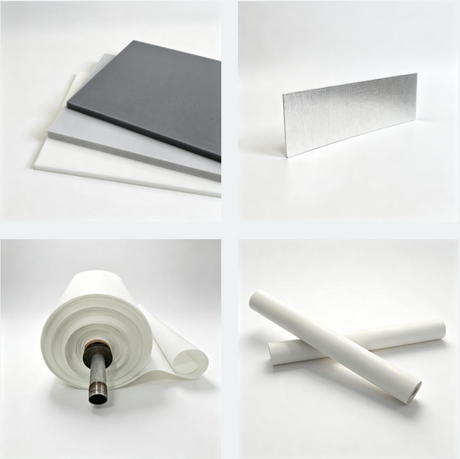
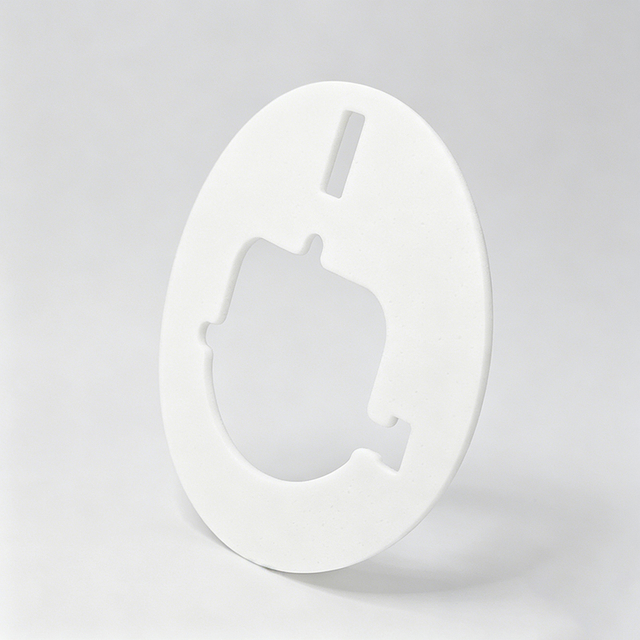
Junhua The new generation of melamine sponge is not a single material product. Instead, it can develop rolls, sheets, and special-shaped molded parts through cutting, die-cutting, thermal compounding and other processes according to the working conditions of different parts of the vehicle. It is widely used in the four major sections of cockpit interiors, power battery packs, cabin firewalls, and multi-functional composite structural parts to achieve multi-scene acoustic, thermal, and safety integrated protection.
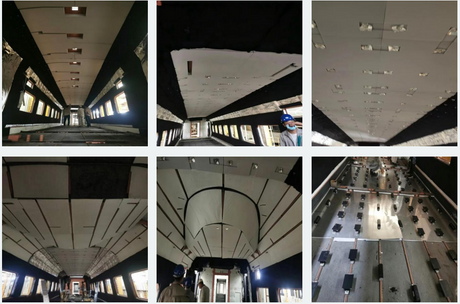
The cockpit is the core area where users directly perceive noise. The ceiling, doors, instrument panel, floor, trunk and other locations are the main paths for noise to enter the cockpit. The melamine sponge is arranged on the above-mentioned interior back panel, and the three-dimensional opening sound absorption properties of the material are used to absorb tire noise, wind noise, and transmission system noise that penetrate the interior panel, and weaken the noise caused by the resonance of the body sheet metal.
At the same time, the material is light in weight and will not bring too much weight to the car body. Its low odor and low VOC characteristics prevent interior materials from releasing odor, taking into account both quietness and cabin health. According to the spatial structure of different vehicle models, the material can be die-cut and processed into various special-shaped contours to fit the complex curved surface of the interior sheet metal without occupying the available space inside the cabin. It is suitable for the interior development of various types of fuel vehicles, pure electric vehicles, and hybrid vehicles.
Power batteries are the core components of new energy vehicles. The internal space of cells, modules, and battery pack casings have multiple requirements for heat insulation, buffering, flame retardancy, and noise reduction. JunhuaMelamine sponge can be used between battery cells, module gaps, and the internal lining of battery pack shells. On the one hand, it acts as thermal insulation, blocking local heat diffusion and reducing the risk of thermal runaway chain spread; on the other hand, it has an elastic buffering effect, absorbing vibration impacts during bumpy driving of the vehicle, reducing friction and collisions between cells and modules; at the same time, it absorbs the vibration noise generated by the BMS and cooling pipelines inside the battery pack, reducing the transmission of vibration to the body.
The material is temperature-resistant, flame-retardant, and low-volatility. It is fully suitable for the sealed and harsh environment of the battery pack. It will not release harmful gases in high-temperature environments to pollute the interior of the battery. It builds a heat-insulating, buffering, flame-retardant and noise-reducing composite protective layer for the power battery.
For hybrid models, the internal temperature of the engine compartment is high, and there are dual noise sources from the engine and motor. The front compartment of pure electric models is also equipped with high-power heating components such as motors and electronic controls. Melamine sponge materials are used in the firewall, U-shaped grooves, and cabin inner guard panels to simultaneously achieve the dual functions of sound insulation and heat insulation: blocking the conduction of cabin heat to the cabin, protecting the cabin interior components from high temperature aging, and blocking cabin noise from penetrating the firewall and entering the cabin.
The material has excellent temperature resistance and anti-aging capabilities, and can withstand high-temperature radiation in the cabin for a long time. It will not cause softening or melting failure of the foam material, protects surrounding electronic components, and improves the quietness of the entire vehicle.
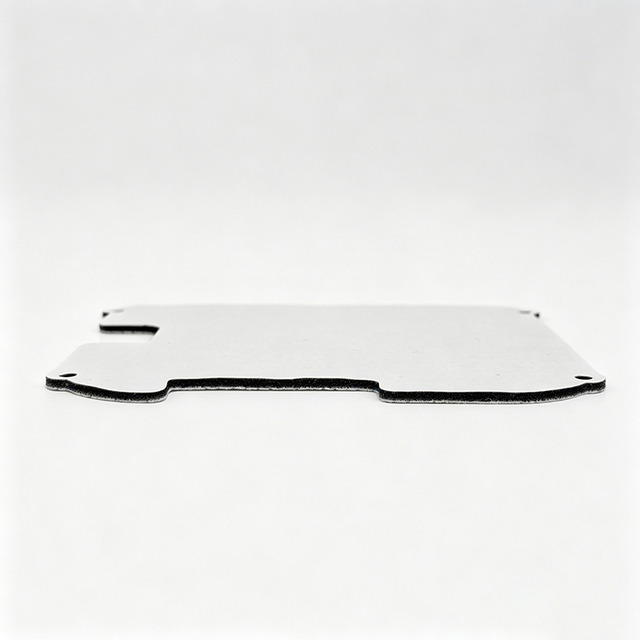
Melamine sponge base material can be compounded with non-woven fabrics, aluminum foil, EVA, EPDM and other materials to expand more engineering applications. Composite aluminum foil can be used to make high-performance heat shields to reflect radiant heat flow; composite non-woven fabrics improve surface wear resistance and scratch resistance, and are used for air duct linings and various sound-absorbing pads; combined with closed-cell foam to build a "sound absorption + barrier" multi-layer acoustic structure to further enhance the noise reduction effect.
Relying on composite technology, it is possible to develop integrated integrated parts, reduce the number of parts, simplify the assembly process, take into account both lightweight and multi-functionality, and adapt to the modular design ideas of the OEM.
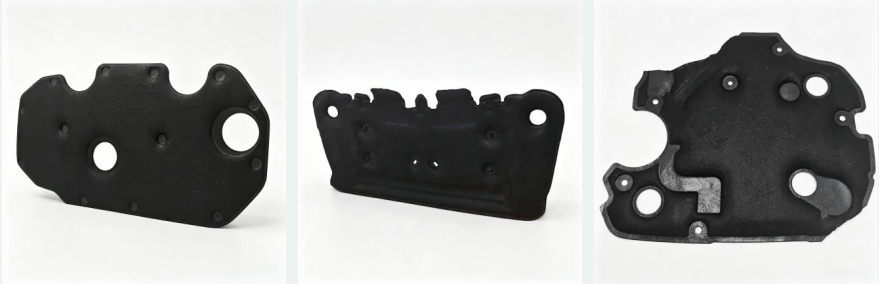
Only by achieving stable mass production and rapid response development can high-performance materials be truly transformed into the competitiveness of vehicle products. Junhua New Materials masters a full set of proprietary processes for melamine sponge from resin synthesis, foaming control to post-processing. The product form is rich. It can not only provide basic rolls and sheets, but also complete precise cutting, die-cutting, and thermoforming special-shaped parts processing according to the three-dimensional digital models of OEMs and first-tier suppliers. The parts can be directly adapted to automated assembly lines, reducing secondary processing procedures for downstream customers and improving assembly efficiency.
The company has established a complete full-process technical service system, covering the entire chain from material research and development, formula customization and optimization, sample trial production, performance verification, small batch trial production to large batch stable delivery. In view of the differentiated working conditions of different vehicle platforms, the technical team can collaborate with the R&D departments of car companies to carry out joint development. According to the temperature range, noise frequency band, spatial boundary, and weight indicators of the target part, the material density, thickness, and composite structure can be adjusted in a targeted manner to output customized material solutions, shorten the development cycle of new projects, and optimize the comprehensive material cost of the vehicle.
At the same time, the company has established a strict quality control system, benchmarked against the IATF16949 quality system requirements of the automotive industry, to achieve full-process quality control from raw material entry, foaming process parameter control, finished product performance testing, to outbound batch traceability, to ensure product performance consistency under large-volume supply, and to avoid vehicle risks caused by material batch differences.
At present, the global new energy vehicle industry continues to develop at a rapid pace. Lightweight, high safety, and green environmental protection have become the irreversible development direction of the industry. NVH comfort and battery thermal safety have become increasingly important considerations for consumers when purchasing vehicles. The vehicle sound insulation and heat insulation material market is undergoing a structural upgrade, and traditional materials are gradually being replaced by high-performance polymer foam materials. With its unique advantages of sound absorption, heat insulation, flame retardancy, lightweight, and environmental protection, melamine sponge is gradually becoming a key functional material in the fields of new energy vehicle cockpits and battery packs from a niche specialty material.
Shanghai Junhua New Materials will continue to delve into the track of automotive polymer functional materials, continue to iterate the melamine sponge product system, continue technological innovation around the four major directions of acoustic noise reduction, thermal safety protection, lightweight, green and low carbon, continue to optimize material formulas and composite processes, and expand more vehicle application scenarios. In the future, the company will continue to strengthen its industry-university-research collaboration and joint customer research and development capabilities. With stable product quality and efficient customized services, it will work with OEMs and first-tier supplier partners to jointly promote the upgrading of domestic automotive functional materials to high performance, integration and greenness, and contribute material strength to the high-quality development of the new energy vehicle industry.