Views: 0 Author: Site Editor Publish Time: 2026-09-07 Origin: Site


Melamine sponge empowered power battery pack: buffering, heat insulation, flame retardant and lightweight integrated solution
The global new energy vehicle industry is accelerating into the second half of competition. As the "heart" of new energy vehicles, the power battery"s safety, energy density and cycle life directly determine the market competitiveness of the vehicle. With the large-scale popularization of high-energy-density batteries such as high-nickel ternary batteries, and the installed volume of lithium iron phosphate systems continuing to increase, the difficulty of internal thermal management of battery packs and structural safety requirements have increased simultaneously. Mandatory battery safety standards have been introduced at the national level, requiring battery systems to achieve thermal runaway warning, thermal diffusion protection, and ensure occupant escape time. This has placed unprecedentedly stringent requirements on the internal functional materials of battery packs.
In the design of the battery pack PACK system, key materials with multiple functions such as cushioning and shock absorption, volume expansion compensation, efficient heat insulation, flame retardant protection, and lightweight need to be filled between the cells, between the modules, and inside the casing. Traditional polyurethane (PU) foam, ethylene propylene diene monomer (EPDM) rubber, glass wool and other materials can often only meet one or two of the requirements. They also generally have shortcomings such as high density, insufficient flame retardancy, limited temperature range, or release of toxic fumes at high temperatures. It is increasingly difficult to adapt to the design standards of the new generation of high energy density and long cycle life battery packs.
Shanghai Junhua New Materials officially launched a melamine sponge solution for battery packs. This product uses melamine resin as the base material, and uses a proprietary foaming process to form a three-dimensional open-pore network structure with an opening rate of over 99%. It can achieve UL94 V-0 level intrinsic flame retardancy without adding additional halogen flame retardants, with a density as low as 8-12 kg/m³, with a temperature resistance range of -160°C to +240°C. It integrates five core functions: buffering and shock absorption, adaptive cell expansion, efficient heat insulation, intrinsic flame retardancy, and lightweight. It provides a one-stop multi-functional integrated material solution for the power battery PACK system and comprehensively protects the structural safety and thermal safety of the battery.
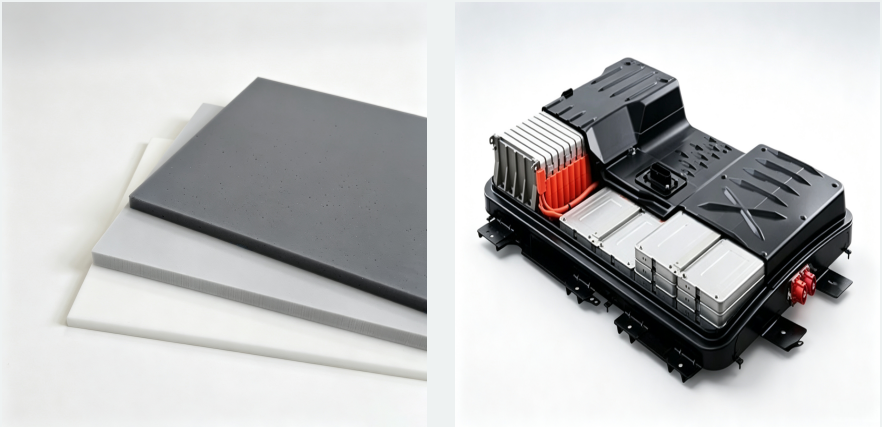
The internal environment of a power battery pack is extremely complex. During vehicle driving, vibrations and shocks caused by road bumps, sudden acceleration and deceleration are continuously transmitted to the battery system. Rigid collisions and friction between cells and modules will accelerate tab fatigue and case deformation, directly affecting battery cycle life and safety. At the same time, lithium batteries will expand and contract in volume during charging and discharging. In particular, the expansion rate of lithium iron phosphate cells is more significant. If there is a lack of flexible buffer compensation materials between the cells, the expansion force will continue to accumulate inside the module, eventually leading to structural deformation, poor contact and even safety hazards.
Thermal management is another core challenge. Battery cells will release a large amount of heat under fast charging and high-rate discharge conditions. If there is no effective thermal insulation between the battery cells, local high temperatures will spread rapidly, inducing a chain of thermal runaway. GB 38031 2020 "Safety Requirements for Power Batteries for Electric Vehicles" implemented in 2021 clearly requires that when a single battery cell experiences thermal runaway, the battery system should not fire or explode within 5 minutes, leaving escape time for the occupants. This mandatory indicator requires the internal materials of the battery pack to have excellent heat spread suppression capabilities, so that when a single cell thermal runaway occurs, it can gain a valuable time window for BMS alarm and personnel evacuation.
Fire safety is an insurmountable bottom line. As the battery pack is a high-energy-density area of the vehicle, the consequences would be disastrous if it catches fire. Traditional organic foaming materials mostly rely on halogen-based flame retardants, and their flame retardant properties will decay over time. When burned, they release a large amount of toxic smoke and molten drippings, which will intensify the danger inside a sealed battery pack. In addition, components such as the BMS, wiring harness, and cooling pipes in the battery pack will also generate vibration noise during operation, which will be transmitted to the vehicle body and affect the NVH performance of the entire vehicle. How to integrate multiple functions of buffering, heat insulation, flame retardancy, noise reduction, and lightweighting in a limited space has become the core proposition of power battery PACK design.
JunhuaThe special melamine sponge for battery packs is aimed at the above-mentioned multiple pain points, achieving multi-functional integration with a single material, and solving the industry dilemma of "focusing on one and losing the other" of traditional materials.
JunhuaBattery pack-specific melamine sponge relies on 23 independent research and development patents and a continuously iterative proprietary formula system. It is deeply optimized for the harsh working conditions of battery packs and has five core properties to build product differentiation and competitiveness.
The material can be filled between battery cores, between battery cores and module shells, and between modules and packages as a flexible buffer layer. Road impacts and vibration bumps during vehicle driving are effectively absorbed and dispersed by the material, which greatly reduces the rigid collision and friction between battery cells, protects the battery tabs and casing from mechanical damage, and extends the overall cycle life of the battery.
The open-pore mesh structure of the melamine sponge provides continuous and gentle support. There will be no stress relaxation and performance degradation under long-term compression, ensuring stable protection throughout the life cycle of the battery pack.
(2) Adaptive cell expansion to maintain stable module structure
Volume expansion and contraction will occur during the charge and discharge cycle of lithium batteries, and the expansion phenomenon of lithium iron phosphate cells is particularly prominent. JunhuaMelamine sponge can be placed in the cell gap in a pre-compressed state. Relying on the excellent compressibility and elastic recovery ability of the open-pore structure, it can adapt to the volume deformation of the cell under different SOC, continuously achieve uniform filling and maintain moderate contact pressure.
This feature can avoid the uneven accumulation of cell expansion stress inside the module, prevent module structural deformation, end plate cracking, tab fatigue fracture and other failure risks, ensure uniform contact pressure at the cell interface, and improve the overall structural reliability and long-term cycle stability of the module. For battery system designs that pursue high group efficiency and long cycle life, this reflects a very critical material application value.
The thermal conductivity of the material is as low as 0.035 W/(m·K), and a large amount of still air in the three-dimensional open hole network forms a natural thermal barrier, which significantly reduces the heat conduction rate between cells. Under normal operating conditions, it helps to balance the temperature distribution inside the battery pack, reduce the temperature difference between cells, and improve the overall performance and life of the battery system.
In extreme thermal runaway scenarios, melamine sponge can play a critical thermal insulation delay role. When a single cell undergoes thermal runaway, the thermal barrier formed by the material can effectively block the rapid spread of heat to adjacent cells, slow down the heat diffusion rate, and gain valuable time for the BMS thermal runaway warning system to issue an alarm, the vehicle control unit to implement safety strategies, and the occupants to safely evacuate, meeting the mandatory requirements of GB 38031-2020 for a 5-minute escape window for thermal diffusion.
For scenarios with high thermal insulation requirements, Junhua can provide airgel composite modified materials with thermal conductivity as low as less than 0.016 W/(m·K); excellent thermal insulation performance can be obtained with a material thickness of 0.2 to 3mm, which is especially suitable for CTP/CTC highly integrated battery packs with limited space.
JunhuaThe flame retardant performance of melamine sponge comes from the molecular structure itself - melamine resin allows it to quickly form a dense carbonized insulation layer on the surface when exposed to fire, blocking the transfer of heat inward and achieving self-extinguishing in the event of fire.
There is no need to add additional halogen flame retardants. The product natively reaches the highest flame retardant level of UL94 V-0. It does not melt and drip when burning, does not produce flowing fire, has low smoke volume, and has weak smoke toxicity. In the special scenario of a battery pack in a confined space, low smoke and low toxicity characteristics are particularly critical - even if the material is thermally decomposed in extreme circumstances, it will not release toxic halogen gases to pollute the internal environment of the battery or aggravate the danger. This intrinsic flame retardant method also ensures that the flame retardant performance is long-lasting and stable, and will not cause flame retardant migration or performance degradation due to long-term high temperatures or the passage of time.
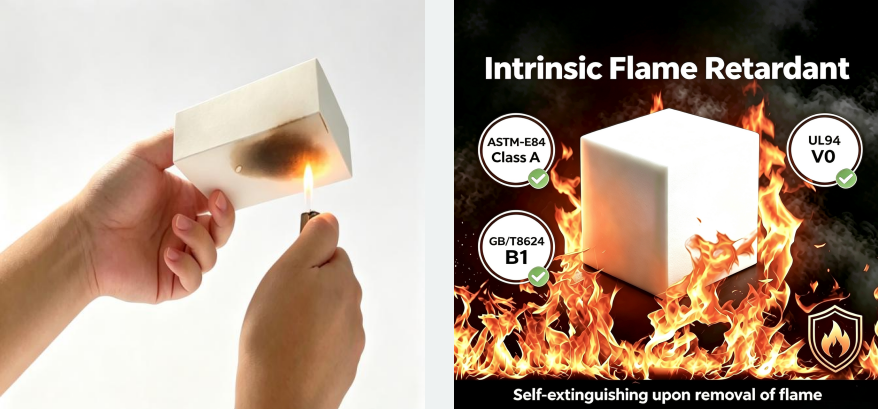
The material density is only 8-12 kg/m³, which is much lower than EPDM dense rubber and traditional glass wool materials, 1/3 of conventional glass wool of 24-36 kg/m³. Used in multiple locations and large areas of the battery pack, it can effectively reduce the additional weight of the PACK. Lightweight and weight reduction can help improve vehicle endurance performance and meet the needs of lightweight development of new energy vehicles.
The temperature resistance range is -160℃~+240℃. It can maintain structural integrity and performance stability for a long time in complex environments such as high-temperature baking (fast charging, summer exposure), extreme cold conditions (high and low temperature alternating cycles) inside the battery pack, and will not cause softening, deformation, brittleness, powdering, or performance degradation. The material also has excellent acid and alkali resistance and aging resistance, adapting to the weak chemical environment generated by the BMS inside the battery pack, ensuring reliable service throughout the life cycle.
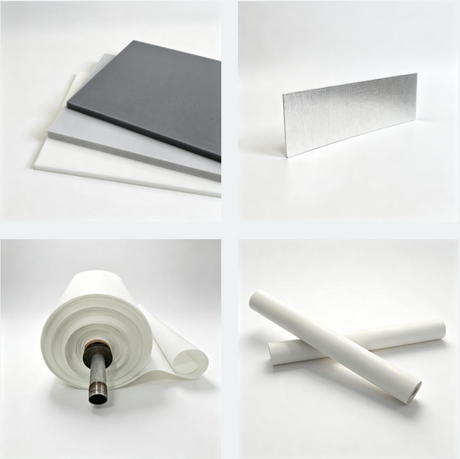
JunhuaBattery pack-specific melamine sponge can be processed into rolls, sheets, and special-shaped molded parts through cutting, die-cutting, thermal compounding and other processes according to the working conditions of different parts of the PACK system, accurately covering key positions at all levels of cells, modules, and packages to achieve multi-functional integrated protection.
The area between the cells is the area where materials are most intensively used in the battery pack. JunhuaMelamine sponge is cut into precise thin slices, pre-compressed and embedded in the gap between the cells. It kills three birds with one stone: the buffer layer absorbs vibration shock and protects the cells from mechanical damage; the thermal barrier layer reduces thermal crosstalk between cells and balances the temperature distribution of the module; the volume compensation layer intelligently adapts to the expansion and contraction of the cells during charging and discharging, maintaining the stability of the module structure. A single material replaces the traditional multi-layer stacking solution, simplifying the PACK assembly process and improving grouping efficiency.
Melamine sponge sheets are attached to the inside of the module side panels and end panels to achieve three functions: block heat conduction between modules and prevent abnormal heat from single cells from spreading to adjacent modules; absorb module vibration transmission and reduce structural resonance noise; provide electrical insulation isolation to prevent abnormal conduction of potential between the module shell and the internal cells. The material can be die-cut into special-shaped parts that fit the curved contours of the side panels and end panels. It is easy to install and does not affect the overall structural strength of the module.
Melamine sponge is laid on the bottom and the inside of the upper cover. The bottom can effectively absorb impact energy, reduce the stress on the battery pack shell, and at the same time isolate the transmission of road heat and noise to the interior of the battery pack. The upper cover can block the radiation of high temperature in the cabin into the battery pack, reduce the internal temperature peak of the battery pack under summer exposure conditions, and absorb the operating noise of the BMS and cooling system.
There is a risk of insulation aging in battery pack internal wiring harnesses, busbars and other components in high-temperature environments. Melamine sponge is used to wrap the wire harness to provide a heat-insulating protective layer and delay the high-temperature aging of the wire harness insulation layer; during the battery pack glue injection process, the sponge rubber strips can effectively prevent structural glue from penetrating into the cell gap, keep the gap uniform, and at the same time serve as auxiliary heat insulation. The material is easy to cut into various cross-sectional shapes to adapt to different wire harness specifications and rubber blocking requirements.
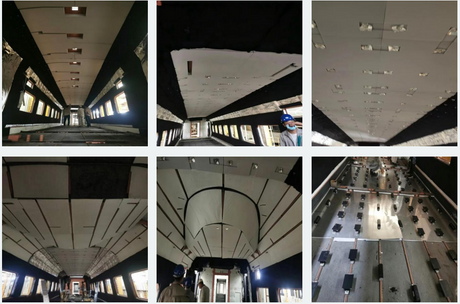
Shanghai Junhua New Material Technology Co., Ltd. is a high-tech enterprise specializing in the research and development, production and sales of melamine sponge. It has complete full-chain capabilities from raw material formulation research and development to finished product processing and delivery. It provides high-performance foam solutions for new energy vehicles, Aerospace, Rail Transit, industrial insulation, Building Acoustics and other industries. It has profound technology accumulation and large-scale production capabilities.
At the technology research and development level, the company holds 23 independent research and development patents, 7 registered trademarks, and has a complete R&D and testing laboratory. It continues to carry out formula iterations for extreme working conditions such as high temperature, high humidity, vibration, and thermal runaway of power battery packs, and continuously optimizes key properties such as flame retardancy, hydrophobicity, and aging resistance of materials. Targeted development can be carried out and special modified formulas can be customized according to differentiated needs such as cell type, PACK structure, and thermal management strategy.
In terms of quality control, the company has obtained UL certification, IATF 16949 automotive industry quality system certification, and simultaneously passed ISO 9001 quality management system, ISO 14001 environmental management system, ISO 45001 occupational health and safety management system and BSCI certification. Product quality is in line with internationally accepted standards. For battery pack application scenarios, a complete third-party testing report can be provided, covering key indicators such as flame retardancy, thermal conductivity, compression rebound, and aging resistance to ensure project material compliance.
In terms of production capacity delivery, the annual production capacity can reach 200,000 cubic meters, with 20,000 square meters of warehousing space. It is equipped with multiple fully automated processing equipment for flat cutting, vertical cutting, and die cutting, and has large-scale mass production and rapid processing capabilities. Whether it is a large-volume vehicle project or small-volume sample development, delivery can be completed stably and the customer supply cycle is shortened.
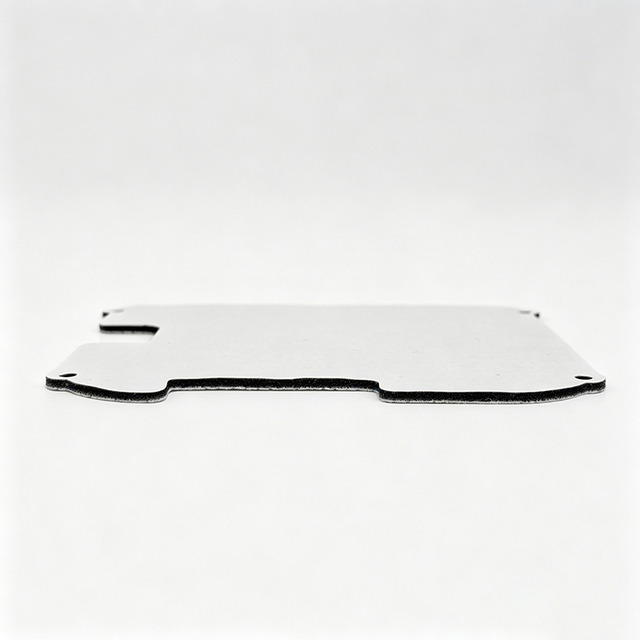
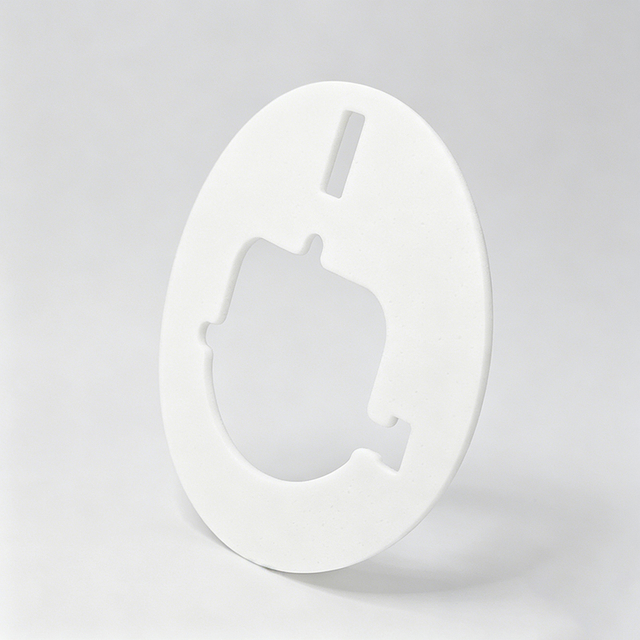
In terms of processing services, in addition to conventional sheets, Junhua provides a variety of deep processing services such as die cutting, lamination, special-shaped processing, hydrophobic treatment, aerogel lamination, etc. According to the customer"s three-dimensional digital model, we can complete the processing of precision special-shaped parts such as gaskets between battery cells and side plate linings; we support different surface layers such as composite non-woven fabrics and aluminum foil to achieve the integration of additional functions and reduce secondary processing steps for downstream customers in one stop.
Power battery PACK systems have increasingly higher requirements for the multi-dimensional performance of functional materials. Single-function traditional buffer materials, heat insulation materials, and flame retardant materials are no longer able to meet the design needs of highly integrated battery packs. Multifunctional integrated materials that integrate buffering and shock absorption, volume compensation, efficient heat insulation, intrinsic flame retardancy, and lightweight will become the mainstream choice in the industry.
With its unique three-dimensional open pore structure and molecular-level intrinsic flame retardant properties, melamine sponge is rapidly moving from a niche specialty material to large-scale application in power battery PACK systems. Junhua New Materials will continue to deeply explore melamine foam technology, keep up with the evolution of power battery technology and industry standard updates, and continue to output customized material solutions around cutting-edge directions such as CTP/CTC highly integrated battery packs and new PACK architectures for solid-state batteries, using high-performance new materials to protect the safety of each battery cell and help the high-quality development of the new energy automobile industry.