Views: 0 Author: Site Editor Publish Time: 2026-09-02 Origin: Site


The sound-absorbing ability of melamine sponge comes from its unique three-dimensional network opening structure. It can be seen under an electron microscope that the interior of the sponge is composed of countless interconnected tiny pores, with an opening rate of over 99%. This structure is like a well-designed maze - after sound waves enter, they will continue to reflect, rub and diffuse between countless holes instead of being bounced back directly.
When sound waves propagate in the pores, air molecules are pushed back and forth, causing severe friction with the pore walls. This friction continuously converts sound energy into weak heat energy, thereby gradually attenuating the sound waves. The higher the porosity and the more tortuous the channels, the higher the efficiency of sound energy conversion and the better the sound absorption effect.
In contrast, in closed-cell foam materials, the pores are not connected to each other, so it is difficult for sound waves to enter the interior of the material, and most of them are reflected by the surface, so the sound absorption effect is very limited. The fully open-pore structure of melamine sponge fundamentally ensures its efficient sound-absorbing performance.
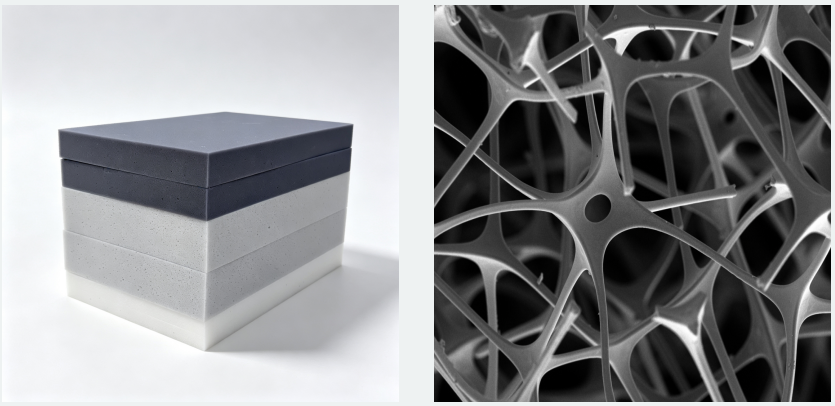
A common indicator to evaluate the sound absorption performance of materials is the Noise Reduction Coefficient (NRC). It is the average sound absorption coefficient of the material at the four frequencies of 250Hz, 500Hz, 1000Hz, and 2000Hz, and the value range is from 0 to 1. The closer the NRC is to 1, the stronger the overall sound-absorbing ability of the material.
The NRC value of melamine sponge is usually above 0.85, and high-quality products can reach above 0.90. This means that a piece of melamine sponge can absorb more than 85% of the sound energy incident on its surface, and less than 15% is reflected back. For comparison, the NRC of ordinary gypsum board is about 0.05, concrete wall is about 0.02, glass wool board is about 0.70-0.85, and polyester fiber board is about 0.50-0.70.
In Building Acoustics design, the NRC value directly determines how much sound-absorbing material needs to be deployed to achieve the target reverberation time. The higher the NRC, the less material area is required and the greater the design freedom. The NRC value of melamine sponge is above 0.85, which allows it to save 15%-30% of material usage compared with traditional materials under the same sound-absorbing effect.
Another important dimension of sound-absorbing materials is frequency response. The ability of different materials to absorb sound at different frequencies varies greatly. Some materials are good at absorbing high-frequency sounds, but have little effect on mid- and low-frequency sounds; and low-frequency noise is often the most difficult problem to deal with in buildings.
The advantage of melamine sponge lies in its wide-band sound-absorbing properties - it not only performs well in the mid-to-high frequency range, but also has a good absorption effect in the mid-to-low frequency range. Especially when the material thickness increases, the sound absorption coefficient in the low frequency band will increase significantly. This characteristic makes melamine sponge very flexible in applications - thin products are used to control the clarity of speech frequency bands, and thick products are used to deal with low-frequency components in music and industrial noise. By choosing the appropriate thickness and installation method, the acoustic needs of different spaces can be matched.
Choosing a suitable melamine sponge product requires comprehensive consideration of sound-absorbing performance, fire protection level, environmental protection requirements, installation method and other factors. The following are several parameter indicators that need to be focused on.
The density of melamine sponge is usually between 8-12 kg/m³, and different densities correspond to different application scenarios. Low-density products have soft texture and good rebound, and are suitable for filling cavities and special-shaped spaces; medium-density products have balanced sound absorption performance and good processability, and are the most commonly used specifications in Building Acoustics; high-density products have higher structural strength and are suitable for making space sound absorbers and styling components.
It should be noted that higher density does not mean better sound absorption. Too high a density may cause the pores to be compressed and the porosity to decrease, affecting the sound absorption effect. Choosing the appropriate density should be based on specific application scenarios and installation methods, rather than blindly pursuing high density.
Building AcousticsMaterials must meet strict fire protection requirements, which is a non-negotiable bottom line in design selection. The molecular structure of melamine sponge contains a large amount of nitrogen. When burned, it releases inert gas to dilute the oxygen. At the same time, a dense coke layer is formed on the surface to block heat and air, so it has intrinsic flame retardant properties.
The fire resistance of high-quality melamine sponge can reach UL94 V-0 level and GB 8624 B1 level (flame-retardant level). In the combustion test, it extinguished immediately after leaving the fire, did not drip, had low smoke and was non-toxic, fully complying with the fire acceptance standards for public buildings. In contrast, although there are flame retardant modified products for polyurethane foam, polyester fiber and other materials, most of them are additive flame retardants. After long-term use, the flame retardant may migrate and precipitate, posing the risk of performance degradation.
For public places with large flow of people and high fire protection requirements, such as airports, subway stations, shopping malls, stadiums, etc., the intrinsic flame retardant properties of melamine sponge provide higher safety guarantees.
Modern buildings must not only be beautiful and comfortable, but also healthy and environmentally friendly. As part of interior decoration, the environmental performance of acoustic materials directly affects indoor air quality and the health of residents.
Melamine sponge itself is an inert polymer material that does not contain formaldehyde, asbestos, or harmful volatile substances, and complies with international environmental standards such as RoHS and REACH. Its fiber structure is stable and does not produce fine fiber dust floating in the air like glass wool and rock wool. It is more friendly to the respiratory systems of construction workers and users.
For projects pursuing green building certification and healthy building certification, the environmentally friendly properties of melamine sponge are an important plus. It not only meets the index requirements of the acoustic environment, but also contributes positive scores to indoor air quality.
Public buildings usually have large spaces, large flows of people, and complex functions, which are the focus and difficulty of Building Acoustics design. Melamine sponge has been widely used in various public buildings due to its excellent comprehensive properties.
Concert halls and theaters are building types with high acoustic requirements. In these spaces, acoustic designers need to accurately control more than ten indicators such as reverberation time, early reflection sound, and sound field uniformity to create good acoustic effects.
Melamine sponge is widely used in professional acoustic spaces: sound-absorbing treatments on the back and side walls are used to control reflected sound and echo; sound-absorbing bodies in the ceiling space assist in adjusting the reverberation time; sound-absorbing treatments around the orchestra pit and behind the stage reflective surface optimize the stage sound environment; sound-absorbing veneers in boxes and lounges improve overall acoustic comfort.
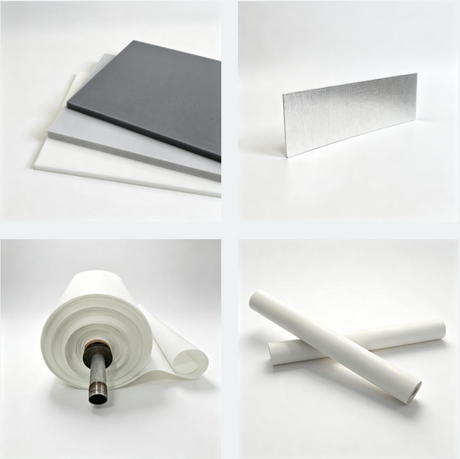
Since melamine sponge can be processed into various thicknesses and shapes - flat plate, wedge, pyramid, cylindrical, etc., designers can flexibly select sound-absorbing components of different shapes based on the results of acoustic calculations to achieve precise acoustic adjustment. With different facing materials, it can also meet a variety of architectural decoration needs and achieve the perfect unity of acoustic and visual effects.
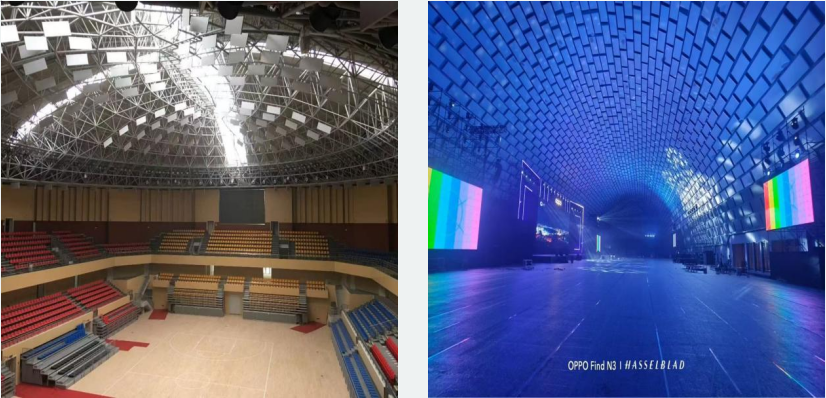
The space volume of large gymnasiums and convention and exhibition centers is often hundreds of thousands of cubic meters. The walls and floors are mostly made of hard materials, and the reverberation time is often as long as 3-5 seconds, seriously affecting speech intelligibility and user experience. There are two major difficulties in the acoustic treatment of this type of long-span building: first, the space is too large, requiring a huge sound-absorbing area; second, due to the limitations of the building structure and visual effects, sound-absorbing materials cannot be laid on the walls at will.
Space sound absorbers are an ideal solution to this problem. Melamine sponges are made into sound absorbers in various shapes such as cubes, cuboids, and cylinders, and are hoisted under the ceiling through a suspension system, like acoustic clouds floating in the air. The benefits of this approach are obvious: the sound absorber can absorb sound on all sides, and the sound absorption efficiency per unit area is much higher than that of wall tiles; the hanging method is flexible and does not affect the building facade and spatial vision; the material is lightweight and will not add too much load to the long-span roof structure.
Actual engineering data shows that in a stadium using melamine sponge space sound absorbers, the reverberation time can be reduced from more than 3.5 seconds to the ideal range of 1.5-2.0 seconds. The clarity of broadcast speech is increased by more than 40%, and the audience"s viewing experience is greatly improved.
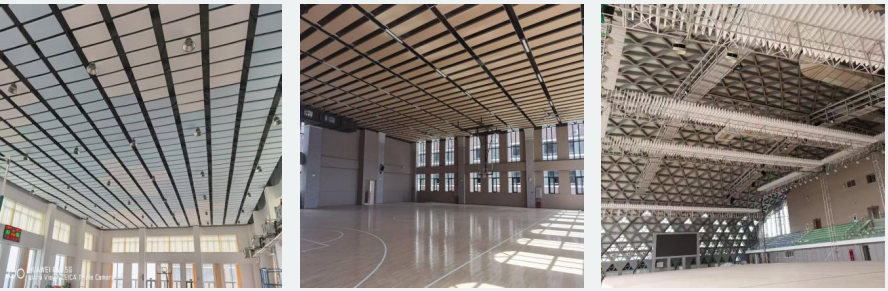
Transportation hubs such as airport terminals, high-speed rail stations, and subway stations are among the noisiest public spaces in the city. The sound of broadcasts, footsteps, luggage wheels, train movement, and the sounds of various equipment are intertwined, creating an extremely complex acoustic environment. For a long time, the acoustic design of this type of building has been a problem - the space is large, the flow of people is high, the maintenance requirements are high, and it is difficult for traditional sound-absorbing materials to balance performance and durability.
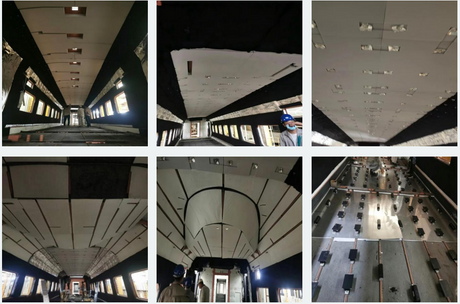
Melamine sponge offers a new solution for acoustic improvements in transport hubs. In subway stations, melamine sponges are made into curved sound-absorbing modules and installed on station ceilings and platform walls to effectively reduce reverberation interference in platform broadcasts and improve broadcast clarity. In the airport terminal, the sound-absorbing ceiling system of melamine sponge composite aluminum mesh or perforated panels greatly reduces the overall noise level in the hall while maintaining a modern and simple visual style.
In addition to its good sound-absorbing effect, melamine sponge"s fireproof, mildew-proof, and aging-resistant properties are also very suitable for public spaces such as transportation hubs with high flow of people and all-weather operation. It does not require frequent replacement and maintenance and can maintain stable acoustic performance over a service life of more than ten years.
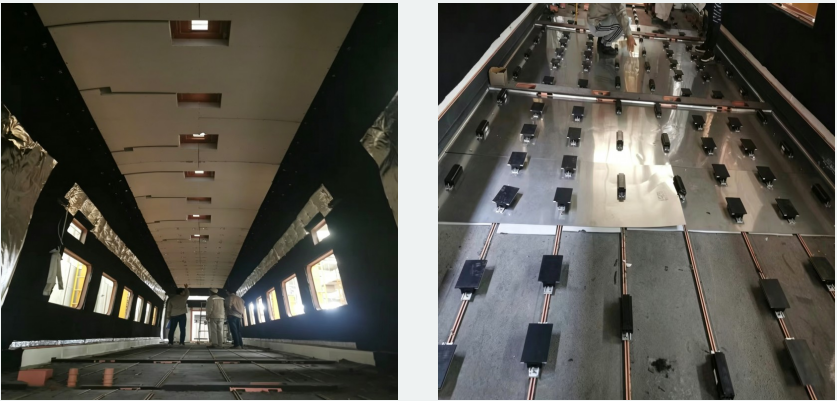
In addition to large public buildings, melamine sponge also plays an important role in office buildings, schools, hospitals and other buildings that are closely related to daily life.
Open office areas are the mainstream form of modern office buildings, but the problem caused by open layout is noise interference. Research shows that employees in open office areas spend an average of 20%-30% of their working time interrupted by noise, and voice noise is the number one source of interference that affects work efficiency.
The applications of melamine sponge in office spaces include: sound-absorbing ceiling systems composed of mineral wool boards or calcium silicate boards, which are the most common practices; wall decorative sound-absorbing panels, such as polyester-faced melamine sponge boards, which have both decorative and sound-absorbing functions; suspended space sound absorbers, suitable for office spaces with higher floor heights; sound-absorbing linings for screens and workstation partitions to reduce sound interference between workstations without changing the spatial layout.
In a well-designed open office area, background noise should be controlled below 45 decibels and voice privacy should be good or above. Melamine sponge, combined with other acoustic measures, can effectively help office spaces achieve these indicators and improve employee work efficiency and satisfaction.
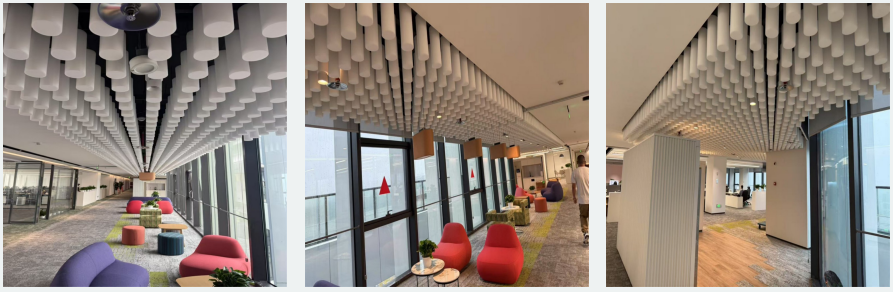
The classroom is where students spend the longest time studying every day, and a good acoustic environment is the basis for ensuring the quality of teaching. If the reverberation time in the classroom is too long, the teacher"s lecture sound will become unclear, and the listening burden of students in the back row will increase significantly. For children who are in the stage of language development, a poor acoustic environment may affect their language acquisition and learning abilities.
Melamine sponge sound-absorbing ceilings and wall sound-absorbing panels can effectively control the reverberation time in the classroom and improve speech intelligibility.
It is particularly worth mentioning that melamine sponge does not contain asbestos, does not produce fiber dust, is environmentally friendly and non-toxic, and is very friendly to the health and safety of teenagers and children. In places like schools where material safety requirements are extremely high, the environmental protection advantages of melamine sponge are particularly prominent.
Hospitals have no less requirements for acoustic environment than schools. Excessive noise will affect the patient"s rest and recovery, increase heart rate and blood pressure, and delay wound healing.
However, in reality, hospitals are often one of the noisiest places in the city - the alarms of monitors, the wheels of carts, footsteps in the corridors, conversations between doctors and nurses... various sounds are intertwined, and the actual noise level in the ward is often more than double the standard.
The application of melamine sponge in hospital acoustic renovation is increasing: sound-absorbing ceilings in corridors and waiting areas reduce the overall noise in public areas; sound-absorbing treatments on walls and ceilings in wards create a quieter recovery environment; acoustic optimization in operating rooms and ICUs provides a clearer communication environment for medical staff. With B1-level flame retardancy and medical-grade environmental protection performance, melamine sponge fully meets the high standards of medical buildings.
Shanghai Junhua New Materials Co., Ltd. is a high-tech enterprise focusing on the research and development, production and sales of melamine sponge. It has full chain capabilities from raw materials to finished products:
• Technology accumulation: 23 independent research and development patents, 7 registered trademarks
• Quality assurance: UL certification, IATF 16949, ISO 9001/14001/45001, BSCI certification, accepted worldwide
• Production capacity guarantee: annual production capacity of 100,000 cubic meters, warehousing area of 20,000 square meters, multiple flat cutting/vertical cutting/die cutting equipment, stable delivery
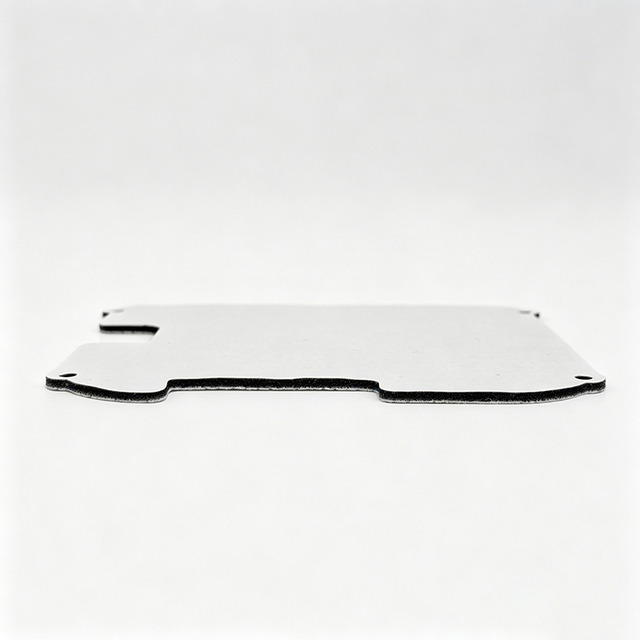
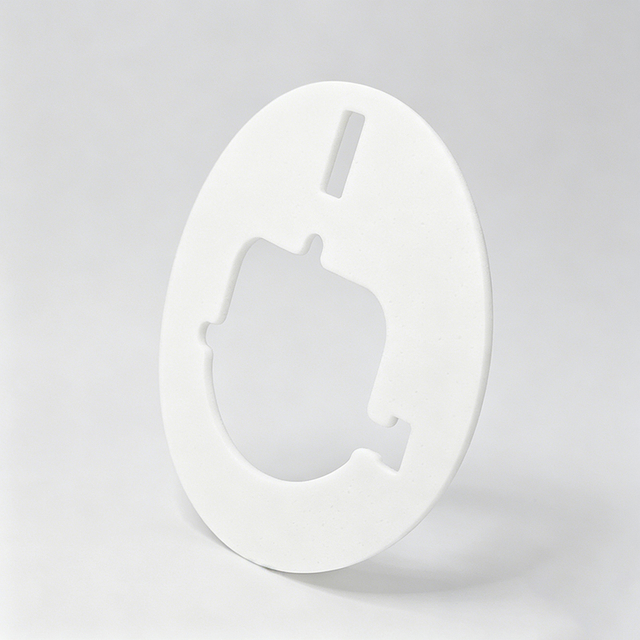
• Customized processing: die cutting/compositing/special-shaped processing/hydrophobic treatment/airgel composite to meet diverse needs
• Industry applications: Aerospace, new energy vehicles, Rail Transit, industrial insulation, Building Acoustics