Views: 0 Author: Site Editor Publish Time: 2026-09-04 Origin: Site


Airgel-melamine sponge: a new generation of nanocomposite insulation materials
In the context of the rapid development of the new energy industry and the continuous upgrading of high-end equipment manufacturing, thermal management has become a core technical link for equipment safety and stable operation. Whether it is new energy power batteries, Aerospace equipment, Rail Transit equipment, or industrial precision instruments, high-power electronic equipment, all have put forward more stringent comprehensive requirements for thermal insulation materials. Not only do the materials need to have ultra-low thermal conductivity, they must also take into account multiple indicators such as wide temperature range environmental adaptability, intrinsic flame retardant safety, lightweight and flexible processing, and green environmental protection.
Traditional insulation materials are limited by their own material systems, and it is often difficult to achieve multiple properties at the same time. Organic foams such as rubber sponges and polyurethane sponges are easy to process but have a low upper limit of temperature resistance. The flame retardant performance requires additional flame retardant additives to achieve, and they easily release toxic smoke when burned. Inorganic fiber materials such as glass wool and rock wool have acceptable high temperature resistance, but they have dust irritation, insufficient flexibility, difficulty in assembly and fitting, and poor adaptability to narrow and special-shaped working conditions.
In the face of market pain points, Junhua new materials are based on years of experience in the research and development and production of melamine sponges, integrating cutting-edge nano-aerogel technology, and officially launching airgel-melamine sponge nano-composite insulation materials. The ultra-low thermal insulation capacity of nano-silica aerogel is deeply combined with the mechanical advantages of the three-dimensional open-pore skeleton of melamine sponge to create a new composite insulation product that integrates thermal insulation, flame retardancy, flexibility and wide temperature range, providing a new thermal management solution for complex working conditions in multiple industries.
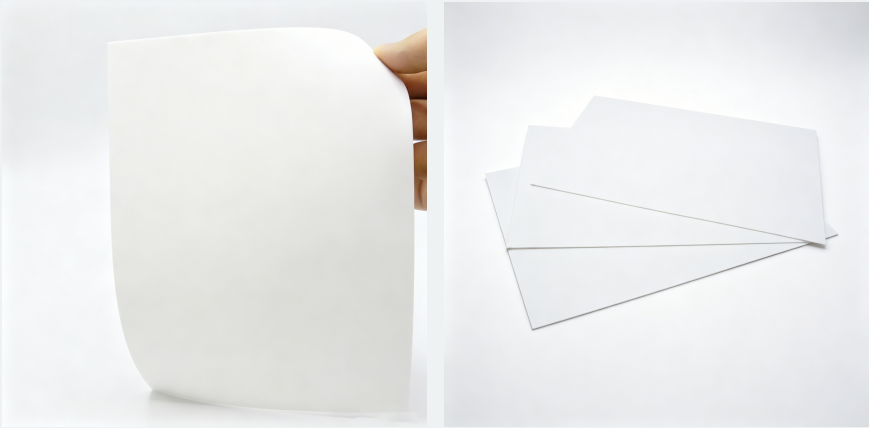
JunhuaAerogel-melamine sponge is a high-performance nanocomposite insulation material. It adopts an in-situ composite process and uses a three-dimensional open-pore melamine sponge as a supporting skeleton. The nanoporous silica aerogel is evenly filled into the sponge pores to form a dual-scale multi-level thermal insulation network structure of macroscopic foam skeleton + microscopic nanoaerogel pores.
Ordinary pure airgel has weak mechanical properties, brittle texture, and is easily broken and powdered under the action of external force. It is difficult to process alone and cannot be directly cut or bent for assembly. Melamine sponge has a continuous three-dimensional cell structure, good toughness and excellent compression resilience. As a carrier skeleton, it can firmly lock the airgel components and solve the industry problem of high brittleness and easy powdering of the airgel body.
The airgel is filled in the pores of the sponge and uses its own nano-scale pores to greatly inhibit gas convection, gas heat conduction and radiation heat transfer paths, achieving extremely low thermal conductivity. At the same time, it completely inherits the flexible, easy-to-cut, and die-cut processing characteristics of the melamine sponge base material, truly integrating ultra-low thermal insulation performance, mechanical flexibility, and intrinsic flame retardant capabilities into the same material to achieve integrated thermal insulation and flame retardancy.
Different from the simple physical mixing and splicing composite products on the market, Junhua this sponge uses a special composite process to achieve even distribution of airgel inside the foam pores, avoiding the problem of local shortage of materials and performance stratification. The thermal conductivity and flame retardant properties of the entire surface of the material are uniform and stable, with high batch consistency, meeting the quality control requirements of large-scale industrial supporting.
After a large number of actual measurements and verifications under industrial working conditions, the core basic performance parameters of this product are as follows:
1. Thermal conductivity: ≤0.016 W/m·K, the thermal insulation performance is far superior to most conventional insulation foam and fiber insulation materials on the market;
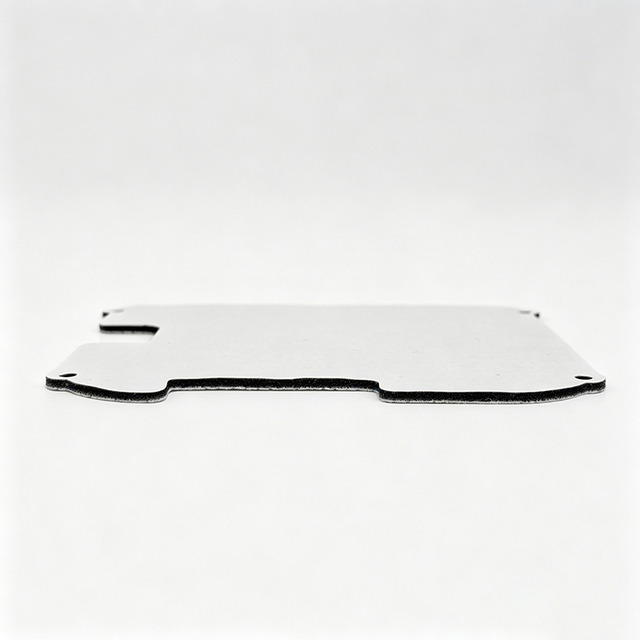
2. Specifications and dimensions: The finished product thickness range is 0.2-3mm, and the ultra-thin specifications can fit into the compact and narrow installation space inside the equipment;
3. Temperature resistance range: Normal and sustainable stable working temperature -160℃~240℃, can withstand short-term high temperature impact, and has stable performance in alternating hot and cold environments;
4. Fire protection performance: It has intrinsic flame retardant properties, no need to add additional flame retardants, and has passed mainstream domestic and foreign fire protection certifications such as UL94 V-0, GB 8624 B1;
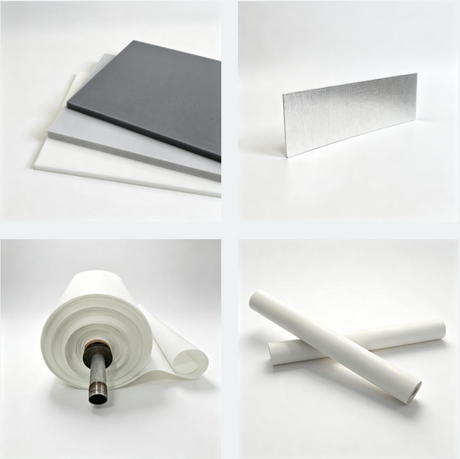
5. Product form: standard flexible roll material, sheet form is also available, supports cutting, die-cutting, composite lamination, and back-adhesive processing, and can be directly connected to automated assembly production lines.
Compared with mainstream insulation products such as rubber sponge, polyurethane sponge, glass wool and rock wool on the market, Junhua airgel-melamine sponge relies on material formula innovation and composite process optimization to form five differentiated core advantages and specifically solve various pain points in high-end application scenarios.
Heat transfer is divided into three forms: heat conduction, heat convection, and heat radiation. There are a large number of nanopores densely packed inside the nanosilica aerogel, and the size of the pores is smaller than the mean free path of air molecules. It can greatly inhibit air convection heat transfer from the microscopic level, cut off the gas heat conduction channel, and achieve extremely low thermal conductivity - the thermal conductivity of the product is as low as 0.016 W/m·K.
Under the premise of the same thermal insulation effect, the required thickness of this material is only about half of that of traditional sponge and fiber insulation materials. Under working conditions where the internal space of the equipment is at a premium, the use of this ultra-thin composite sponge can effectively compress the space occupied by the insulation layer and release more internal volume of the equipment, which is conducive to equipment integration and miniaturization design.
Compared with traditional insulation materials, there is no need to pile up a thick insulation layer to achieve excellent thermal insulation effect. It can play an outstanding role in both high-temperature side heat insulation and low-temperature side cold insulation and anti-condensation prevention.
Many traditional organic foam materials will soften, shrink, deform and melt when the temperature exceeds 120°C. Ordinary inorganic fiber materials are prone to powdering, structural collapse, and continuous attenuation of thermal insulation performance after repeated hot and cold cycles.
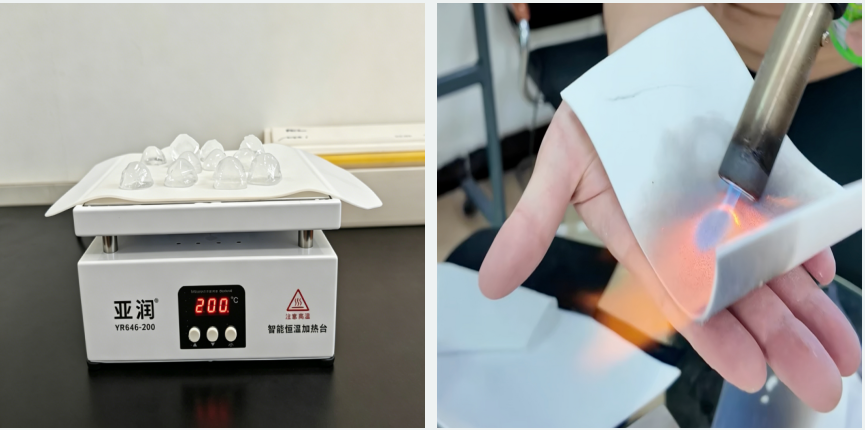
Junhua The airgel-melamine sponge has been treated with a special composite modification process, and the upper limit of continuous use temperature reaches 240°C. Even in the face of short-term high temperature impact, the material body will not shrink, deform, crack, pulverize and fall off, etc. The low-temperature end can reach -160°C, and will not become hard and brittle in deep cold environments. It still retains flexibility and is suitable for scenarios with a wide temperature range from ultra-low temperature to medium-high temperature.
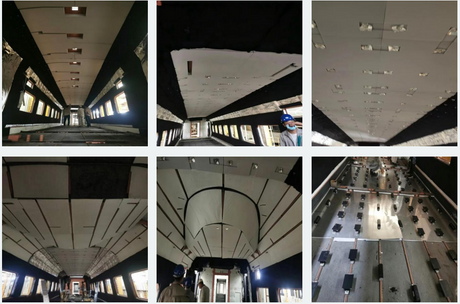
In the face of repeated alternations of cold and heat caused by equipment starting and stopping, the composite skeleton structure of the material can buffer the stress caused by thermal expansion and contraction, and the performance degradation is small under long-term working conditions. This characteristic makes it an ideal material for thermal isolation of new energy battery packs, thermal management of airborne equipment, industrial high-temperature pipelines, and cryogenic equipment. It can adapt to use environments with large temperature differences between day and night and severe temperature fluctuations in working conditions.
Fire safety is a top priority when selecting industrial materials. Many organic insulation foams are flammable materials and require a large amount of halogen flame retardant additives to achieve the flame retardant level. When burning, they will release a large amount of smoke and toxic and corrosive gases, posing secondary safety risks. Although some inorganic fiber materials do not support combustion, they will produce irritating dust, endangering the health of operators.
JunhuaAerogel-melamine sponge relies on the native self-extinguishing chemical structure of the melamine molecule itself. It is an intrinsically flame-retardant material. It does not require the addition of additional flame-retardant additives during the production process, and it also achieves halogen-free and environmentally friendly properties. The material will carbonize and self-extinguish when exposed to an open flame, and will not melt or drip. It will not release a large amount of smoke or toxic and harmful gases during the combustion process, greatly reducing the risk of secondary disasters in fire scenarios.
At the same time, it complies with RoHS, REACH and other environmental protection requirements, and is suitable for application fields with strict requirements on fire safety and environmental protection, such as energy storage, new energy, and sealed cabins.
Some high-performance insulation materials, such as pure airgel felt and ceramic fiber boards, are hard and brittle and easily crack and fall off after bending. They are difficult to fit when facing special-shaped curved surfaces and narrow gaps. They are difficult to construct and assemble, and may also produce dust pollution.
JunhuaAerogel-melamine sponge has a soft overall texture, good compression rebound characteristics, reasonable density, and overall lightweight. The product can be easily cut and trimmed, can be bent, and can cover curved surface structures; facing narrow gaps and irregular shaped cavities inside the equipment, the material can closely fit the surface of the component after being pressed, eliminating the air gap between the insulation layer and the components, avoiding thermal bridges, and ensuring the overall thermal insulation effect.
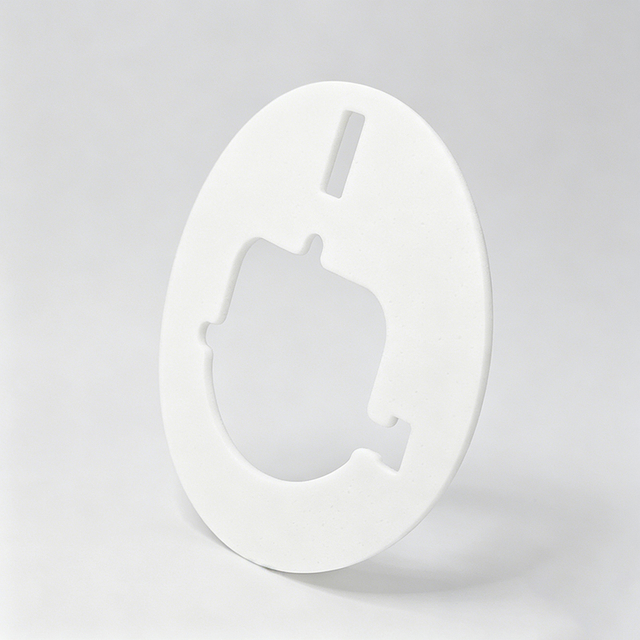
Material handling, bonding, and assembly operations are simple. It is suitable for manual small-batch assembly, and can also be die-cut and processed into customized size parts. It is suitable for high-speed assembly of automated production lines and perfectly matches industrial thermal design solutions with complex structures.
In order to facilitate quick selection by engineering designers, we compared the comprehensive performance of airgel-melamine sponge with NBR/EPDM rubber sponge, PU polyurethane sponge, glass wool/rock wool, which are widely used in the market, and conducted analysis from multiple dimensions of thermal conductivity, flame retardant performance, temperature resistance range, and environmental protection and safety.
Material type | Thermal conductivity (W/m·K) | Flame retardant properties | Temperature resistance range (℃) | Environmental protection and usage characteristics |
Airgel-melamine sponge | 0.016 | Intrinsically flame retardant UL94 V-0, GB 8624 B1 | -160~240 | Green, halogen-free, low smoke and non-toxic, flexible and processable, no dust pollution |
NBR/EPDM rubber sponge | 0.038 | Need to add flame retardant | -40~105 | Some products contain halogen and are prone to aging at high temperatures. |
PU polyurethane sponge | 0.040 | Need to add flame retardant | -50~120 | Burning releases toxic fumes, and it is easy to melt and shrink at high temperatures. |
Glass wool/rock wool | 0.045 | It is non-combustible but produces dust and smoke | -50~250 | There is irritating dust, poor flexibility, and difficult to fit special-shaped parts. |
Over the years, Junhua New Materials has continued to delve deeply into the track of melamine sponge and composite insulation materials, insisting on driving industrial upgrading through material technology innovation, and completing technological iterative leaps from basic melamine sponge products, to new airgel composite materials, to multi-functional integrated insulation components.
At a time when the performance bottlenecks of traditional materials in the industry are highlighted, companies continue to invest in research and development, optimize the airgel composite process, continuously improve the comprehensive performance of materials, and at the same time optimize the production process, improve product batch stability, and expand the application scenarios of materials.
The company holds 23 independent research and development patents, 7 registered trademarks, and a full set of international certifications such as UL, IATF 16949, ISO 9001/14001/45001, RoHS, REACH, and BSCI. The standardized factory has an annual production capacity of 200,000 cubic meters, 20,000 square meters of warehousing space, and fully automated equipment for flat cutting, vertical cutting, die cutting, and compounding to ensure on-time delivery of large batch orders.
From selection testing to solution design, from sample verification to batch delivery, Junhua provides full-process technical support to ensure that every project can take root and achieve standard results.
Under the general trend of advancing the dual-carbon strategy and accelerating the localization of high-end equipment, the importance of thermal management materials continues to increase. In the future, Junhua New Materials will continue to build on its solid material research and development capabilities, strictly control product quality, and provide efficient, safe, and integrated thermal management solutions to global industrial customers.
Promote the implementation of new nanocomposite insulation materials such as airgel-melamine sponge in more high-end scenarios, allowing high-performance insulation materials to truly exert their value and help downstream equipment achieve safety upgrades and energy efficiency improvements.
From traditional glass wool, rock wool, to organic foam, to today"s airgel composite nanomaterials, the development process of thermal insulation materials is a history of technological innovation that constantly breaks through performance boundaries. Every material upgrade provides stronger support for the safety, energy efficiency and reliability of industrial equipment.
JunhuaAerogel-melamine sponge is a representative work in this wave of innovation. It deeply integrates the ultimate thermal insulation of aerogel with the flexible flame retardant of melamine sponge. It uses one material to solve multiple needs such as thermal insulation, fire protection, temperature resistance, flexibility, and environmental protection, providing new possibilities for thermal management of high-end equipment.